Foliar Feeding Guide: When, How, and Which Nutrients Work
You see yellowing leaves, poor fruit set, a plant under stress — yet the fertilizer you applied to the soil just isn't working. Many growers across Mediterranean and export-oriented production, both under cover and in open field, know this picture. Usually the problem is not the fertilizer itself, but the fact that the plant cannot take nutrients up through the roots at that moment. This is exactly where foliar feeding comes in.
This guide looks at when foliar feeding makes sense, how to apply it correctly, and which nutrients actually work through the leaf, from an agronomist's perspective. Let's be clear from the start: foliar feeding is not a replacement for soil nutrition — it is a complement to it. Growers who understand this distinction save both money and yield.
What is foliar feeding?
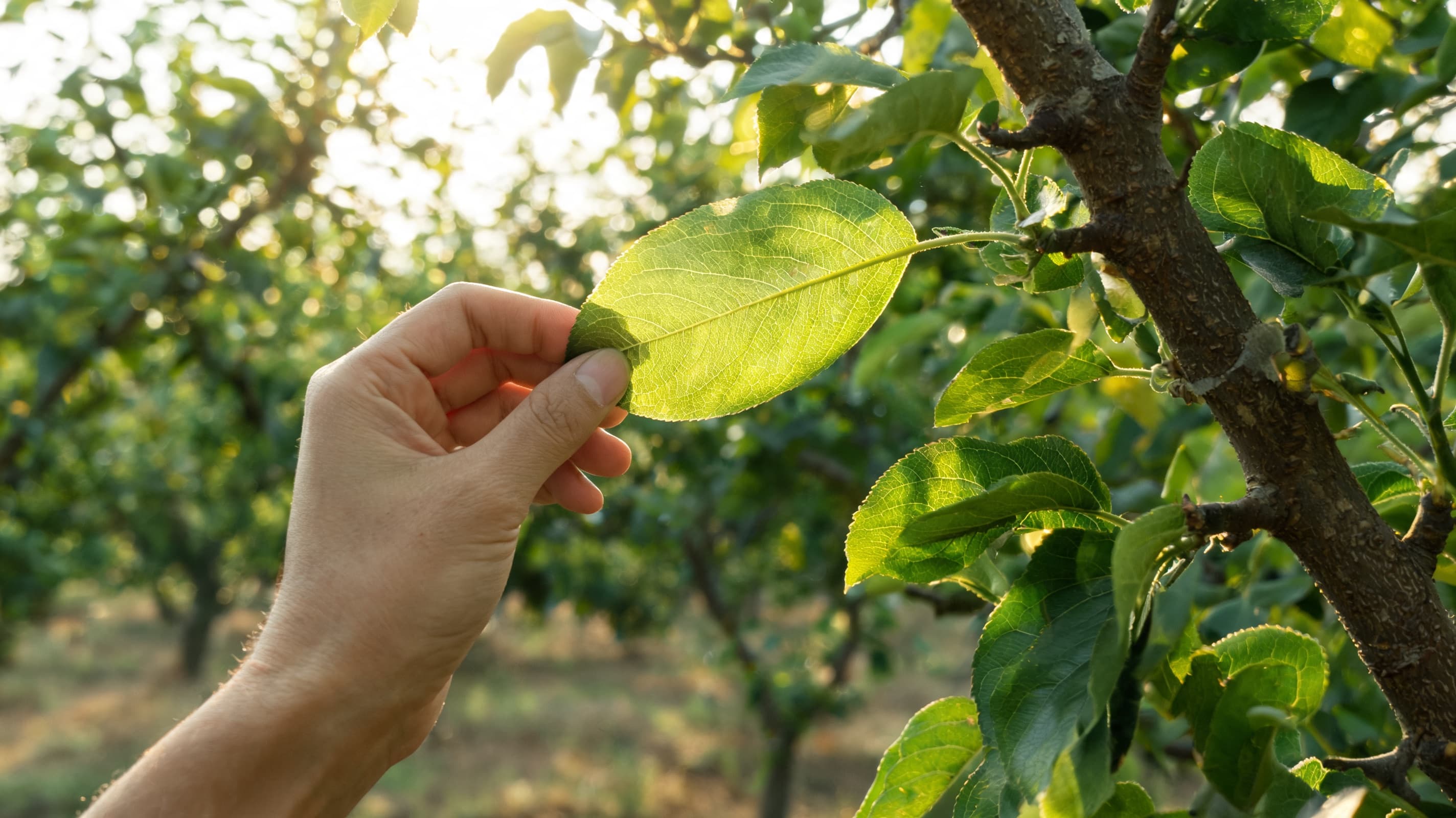
Foliar feeding is the practice of dissolving plant nutrients in water and spraying them onto the leaf surface so the plant absorbs them directly through the leaf tissue. Instead of uptake from the soil solution via the roots, the nutrient passes into the cell through the leaf cuticle and the stomatal openings.
The biggest advantage of leaf uptake is speed. A micronutrient applied to the soil can take days to reach the root and be absorbed. The same nutrient applied to the leaf enters the tissue within hours. This makes foliar application the most practical tool for urgent deficiency correction and stress periods.
However, the leaf's uptake capacity is limited. It is not possible to meet a plant's full macronutrient demand (nitrogen, phosphorus, potassium) through the leaf — those quantities are too high and would scorch the foliage. The leaf is powerful in small doses and targeted supplementation.
When does foliar feeding make sense?
Foliar application is not a cure-all. Used at the right time it is powerful; used at the wrong time it wastes money and labor. Foliar feeding genuinely makes sense in the following situations:
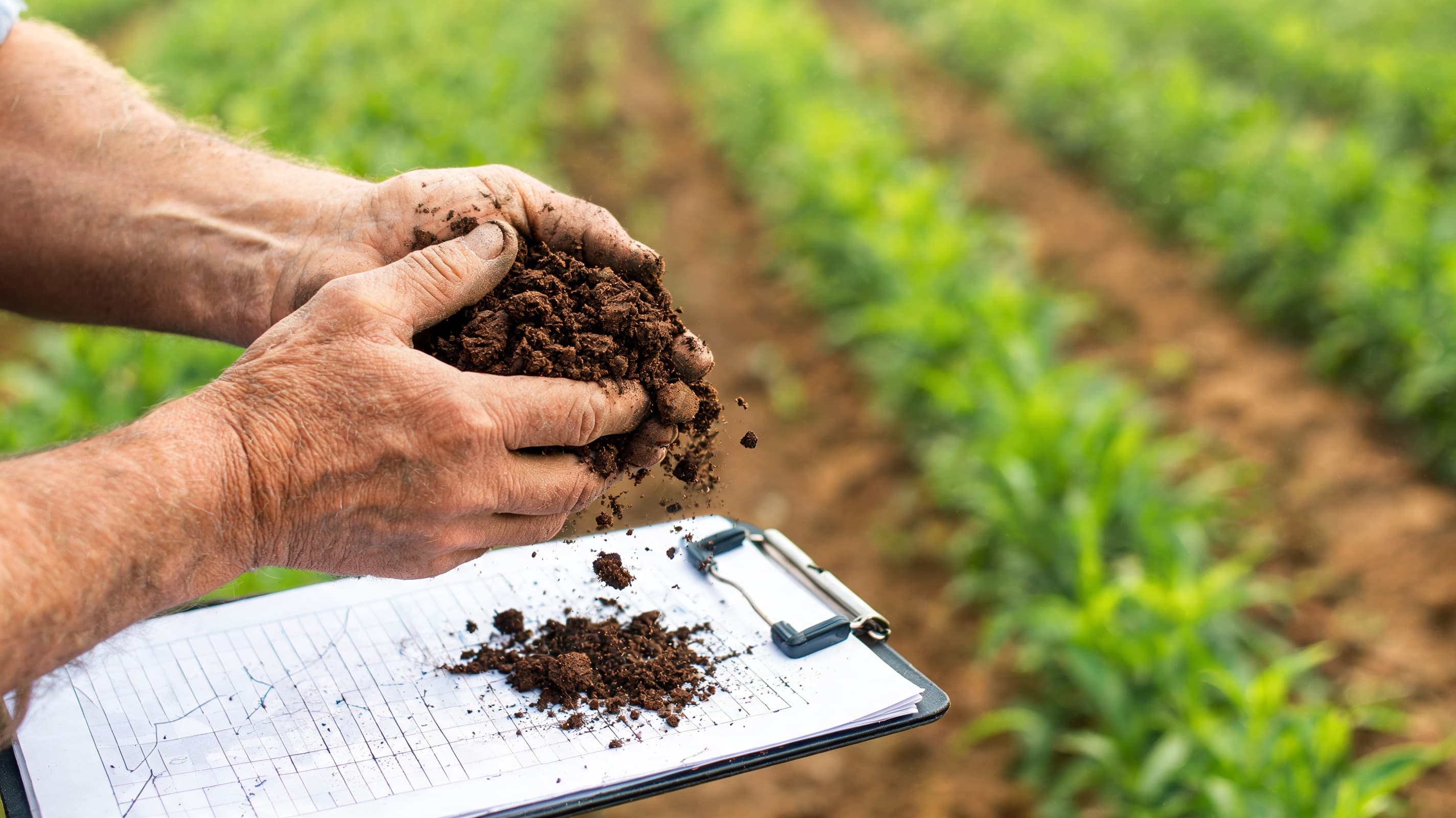
1. When root uptake is impaired. If soil temperature is low (early spring), the soil is waterlogged or compacted, or the root zone is weakened by disease or nematodes, the root cannot absorb nutrients. Even when nutrients are present in the soil, the plant cannot reach them. In this case the leaf builds a temporary nutrient bridge.
2. Rapid deficiency correction. When a clear deficiency symptom appears on the leaf (yellowing, interveinal chlorosis, marginal scorch), waiting costs yield. Foliar application speeds up the correction.
3. Micronutrient supplementation. Micronutrients such as iron, zinc, manganese, copper and boron are needed only in very small amounts. When these small amounts are delivered through the leaf, the result is both effective and economical. Especially in high-pH (calcareous) soils, these elements become locked up and unavailable — the leaf bypasses this blockage.
4. Critical phenological stages. During flowering, fruit set, and grain fill, when nutrient demand peaks, root uptake may not keep up with demand. Targeted foliar supplementation makes a visible difference in these windows.
5. Stress periods. Under heat waves, drought, salinity or root stress, the plant shifts into defense mode. Small support doses applied to the leaf during these periods can help keep the plant going.
Rule: Foliar feeding is strongest when the root cannot take up nutrients, or when demand exceeds supply. When the root is healthy and the soil is balanced, the main nutrition still runs through the soil.
The Markka approach: right form, right stage
Markka Genetik's product logic is built on this principle of complementarity. Forms suited to foliar application are designed to deliver the nutrient the plant needs at that moment, quickly and safely.
- Water-soluble fertilizers are the foundation of foliar application. A fully soluble product will not clog nozzles or leave residue on the leaf. Markka's Master Composite series (for example Master Potassium Nitrat, Master Calcium Nitrate) is suited to both drip irrigation and, at the appropriate dose, foliar application thanks to its water-soluble structure.
- Micronutrient chelates deliver iron, zinc and manganese that are unavailable in high-pH soils. A chelate holds the element within a stable organic shell, so it does not become bound in the soil or the solution. Products in Markka's iron category, such as Ferron and Ferroling, work on this principle. On the zinc side, Zinconit and Zincor stand out; for manganese, Fito is a leading option.
- Compound products formulated as leaf fertilizers deliver several elements in a single application. Where biostimulant support is wanted, the seaweed-based Algisea or the amino-acid product Diamente can help the plant recover during stress periods.
How much of each product to apply always depends on the product label and on soil/leaf analysis. At Markka we do not give a fixed dosage recipe — because the correct dose changes with the crop, the growth stage, water quality and the severity of the deficiency. Stay within the dose range stated on the label, and seek expert advice when in doubt.
How is foliar feeding applied correctly?
Choosing the right product is half the job. The other half is application technique. The same product, applied under the wrong conditions, will be both ineffective and capable of burning the leaf. Here are the field-proven rules that make the difference:
1. Choose the cool hours
The best time for foliar application is early morning or late afternoon. Sprayed in the midday heat, droplets evaporate quickly; the concentrated salt left behind scorches the leaf. Heat also closes the stomata, reducing uptake. In cool, humid hours the stomata are open, the droplet stays on the leaf longer, and uptake rises.
2. Wet the underside of the leaf too
Most of the nutrient is absorbed through the underside of the leaf, because stomatal density is higher there and the cuticle is thinner. Wetting only the upper surface means losing half the uptake. Set the spray so coverage reaches both the top and the underside of the leaf.
3. Check water quality and pH
Spray-water quality is often overlooked, yet it directly determines the result. Hard water (high lime, high EC) precipitates and neutralizes some elements. Ideally the spray water is kept in a slightly acidic pH range, where many nutrients are more stable. If your water is hard or high-pH, a water analysis before application is a wise step.
4. Mind the droplet size
Fine-to-medium droplets spread more evenly on the leaf surface and give better coverage. Very large droplets run off onto the soil; very fine droplets drift and miss the target. Nozzle selection and pressure setting determine the efficiency of the application.
5. Use a spreader-sticker
The leaf surface is waxy and water-repellent; droplets bead up and run off. A spreader-sticker (surfactant) lowers surface tension so the droplet spreads over and adheres to the leaf. This markedly increases uptake, especially on waxy-leaved crops (brassicas, citrus).
6. Coverage and repetition
A single application may not fully correct a deficiency. In severe cases the application can be repeated at intervals of a few days. But stay within the dose range on every repeat — "more is better" does not apply to foliar feeding.
Which nutrients work through the leaf?
Not every element enters the leaf with equal efficiency. Some are very well suited to foliar application; for others the soil route makes more sense. The table below is a rough guide:
| Nutrient | Foliar efficiency | Note |
|---|---|---|
| Micronutrients (Fe, Zn, Mn, Cu, B) | Very high | Small doses, fast response. Foliar's strongest domain. |
| Calcium (Ca) | High (targeted) | Immobile within the plant; needs direct, targeted application to fruit/young tissue. |
| Boron (B) | High | Effective before and during flowering; narrow safe range, mind the dose. |
| Nitrogen (N) | Medium | Fast support at low dose; the main demand is met from the soil. |
| Magnesium (Mg) | Medium-high | Rapid correction of interveinal yellowing. |
| Phosphorus, Potassium (P, K) | Limited | High demand; the main nutrition runs through the soil, foliar is supportive. |
A few points deserve emphasis:
Micronutrients are the heart of foliar feeding. These elements, needed at parts-per-million levels, act quickly and economically when applied in small doses through the leaf. In calcareous soils iron and zinc become locked up — the leaf is the only practical way to bypass that blockage.
Calcium and boron hold a special place. Calcium is almost immobile within the plant; even once taken up by the roots and delivered to older leaves, it will not move on from there to the fruit. That is why, in calcium-related disorders (bitter pit in apple, blossom-end rot in tomato and pepper), foliar application is valuable — it delivers the element directly to the young tissue and fruit that need it. Boron is likewise critical for flowering and fertilization; but boron's safe range is narrow — too little causes deficiency, too much causes toxicity. Here the dose is especially label-dependent.
Nitrogen is supportive at low dose. The leaf cannot meet the plant's total nitrogen demand. But at critical stages, low-dose foliar nitrogen can provide a fast greening and recovery.
Leaf or soil? Both.
This is the most important message in this guide: foliar feeding does not replace soil nutrition. The two do different jobs.
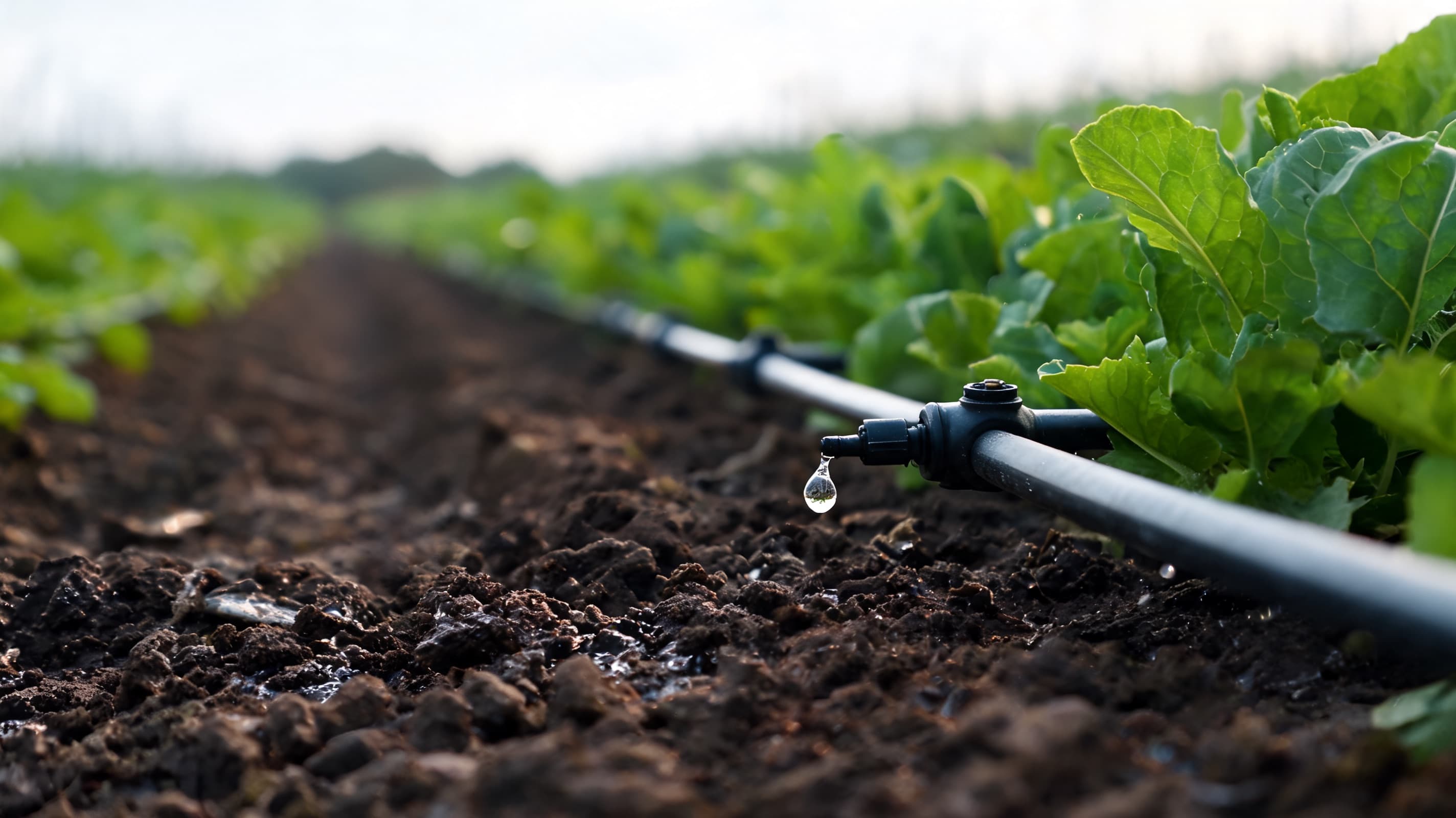
- Soil nutrition meets the plant's main, continuous, high-volume nutrient demand. The root system is the real engine that carries water and nutrients throughout the season. Without a healthy soil and root zone, no foliar program can carry the crop.
- Foliar nutrition is a fast, targeted, complementary tool. It steps in when the root cannot keep up, when demand rises, or when the element is locked up in the soil.
A sound program builds the two together: main nutrition from the soil (drip or soil-applied), foliar supplementation at critical stages and moments of deficiency. A grower who uses foliar as "I'll neglect the soil and fix everything by spraying" raises costs and gets no result. Soil analysis, and leaf analysis where available, is the healthiest way to strike this balance.
Leaf burn and incompatibility
Foliar feeding has two major pitfalls: leaf burn (phytotoxicity) and tank-mix incompatibility. Both are preventable.
Leaf burn usually comes from these mistakes:
- Pushing the dose above the label range ("adding extra to be safe")
- Applying in the heat of the day, under high sun
- A high-EC mix reaching sensitive or young leaves
- Spraying a stressed, water-short plant (the plant is defenseless)
To reduce burn risk: stay within the dose range, apply in the cool hours, run a small-area trial with any product you use for the first time, and do not spray plants when they are water-short and stressed.
Incompatibility is when two different products, mixed in the same tank, react chemically and precipitate or lose their effect. The classic example is a calcium-containing product mixed with a phosphate- or sulfate-containing one — a precipitate forms, nozzles clog, and neither product delivers. Therefore:
- Do not mix different products at random.
- Read the mixing warnings on the labels.
- If unsure, run a jar test in a small container: mix at the same ratio and wait a while; if there is precipitate, flocculation or color change, do not use that mix in the tank.
- When in doubt, apply the products in separate passes.
Rule: In foliar feeding, "small and correct" always beats "large and random." The only antidote to both burn and incompatibility is reading the label and testing first.
Common mistakes
- Neglecting the soil and loading everything onto the leaf. The leaf is a support tool, not the main engine.
- Spraying in the midday heat. That means evaporation, burn and low uptake.
- Raising the dose at will. "Correct," not "more," is what works.
- Wetting only the top of the leaf. Most uptake happens on the underside.
- Ignoring water quality. Hard, high-pH water neutralizes the element.
- Mixing products without testing. Incompatibility wastes both the product and the application.
- Skipping the spreader-sticker. On a waxy leaf the droplet will not adhere and uptake drops.
Frequently Asked Questions (FAQ)
When should foliar feeding be done? The best time is early morning or late afternoon — the cool, humid hours. At these times the stomata are open, evaporation is low, and burn risk is lowest. Foliar application should not be done in the midday heat.
Can leaf fertilizer replace soil fertilizer? No. Foliar feeding is a complement to soil nutrition, not a replacement. The plant's main, high-volume nutrient demand is met from the soil and roots; the leaf is used for fast, targeted supplementation.
Which nutrients work best through the leaf? Micronutrients (iron, zinc, manganese, copper, boron) are the most effective in foliar application because they are needed in very small doses and respond quickly. Calcium and boron are also valuable in targeted application. Phosphorus and potassium, needed in high amounts, should be applied mainly through the soil.
Why does leaf fertilizer cause burn? Burn usually comes from too high a dose, application in the heat, high salt concentration (EC), or spraying a stressed plant. Staying within the dose range, applying in the cool hours, and testing on a small area at first use will prevent burn.
Can I mix different leaf fertilizers in the same tank? Not always. Some products are chemically incompatible and form a precipitate when mixed (for example calcium with phosphate/sulfate). Run a jar test in a small container before mixing; if you see precipitate or flocculation, apply them separately.
How do I correct iron deficiency in calcareous (high-pH) soil? In high-pH soils iron becomes locked up and cannot be taken up by the roots. In this case a foliar application with a chelated iron product is the most practical solution, because it delivers the element directly to the plant. Follow the product label and leaf analysis for the exact dose.
Does water quality affect foliar application? Yes, significantly. Hard, high-lime or high-EC water precipitates and neutralizes some elements. Keeping the spray water in a slightly acidic pH range improves the stability of most nutrients. If your water is hard, get a water analysis first.
Conclusion
Used correctly, foliar feeding is the fastest nutrition tool at your disposal: it shows its value the moment the root cannot keep up, when a deficiency symptom appears, in micronutrient supplementation, and at critical stages. But its strength comes from knowing its limits. The leaf does not replace the soil — it complements it. Applied in the cool hours, at the correct dose, with clean water, wetting the underside too, and testing first, it is both safe and effective.
At Markka Genetik we produce water-soluble fertilizers, micronutrient chelates and leaf fertilizers on this principle of complementarity. For more than 20 years we have produced in Türkiye and shipped to over 30 countries — our production is registered with the Republic of Türkiye Ministry of Agriculture and Forestry. To clarify which nutrient your plant needs, at which stage and in which form, the right path is to seek expert advice together with your soil and leaf analysis.
To plan your products and your nutrition program, explore our catalog and reach out with your questions.
Power of Soil, Light of Science.