Iron Chlorosis (Leaf Yellowing) in Calcareous Soil and the Chelate Solution
If young leaves turned yellow in early summer while the leaf veins stayed green, you are looking at a classic case of iron chlorosis. And you can face this problem even when your soil contains plenty of iron. In calcareous soils, the issue is not the absence of iron but the plant's inability to take it up.
This article explains why iron chlorosis appears in calcareous Mediterranean soils, how to diagnose it in the field, and which iron chelate type actually works in high-pH soil. A practical reference for citrus, grape and olive growers and for agronomists.
What Is Iron Chlorosis?
Iron chlorosis is the yellowing of leaves caused by a plant's inability to take up enough iron. Iron is a building block of an enzyme involved in chlorophyll production. When iron is deficient, chlorophyll production drops and the leaf loses its green color.
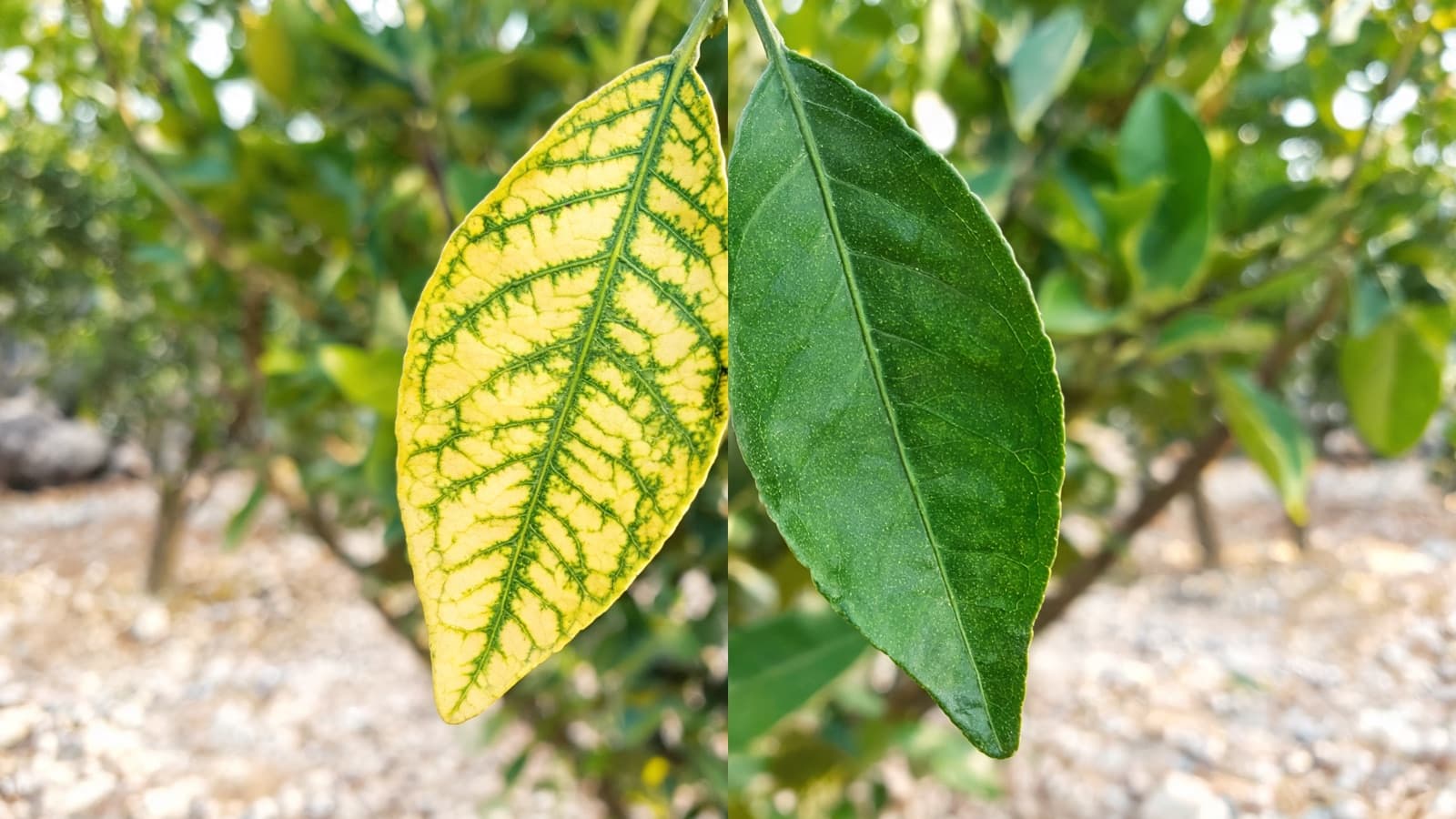
The distinctive sign of chlorosis is this: the yellowing occurs between the veins, while the veins stay green. This is called interveinal chlorosis and is the classic symptom of iron deficiency.
There is an important distinction. Iron is an immobile element inside the plant. The plant cannot pull iron out of old leaves and move it to new ones. For this reason iron chlorosis starts first in the youngest leaves, at the shoot tips. Magnesium deficiency, by contrast, appears in older leaves — this difference guides diagnosis.
Why Does Iron Chlorosis Occur in Calcareous Soil?
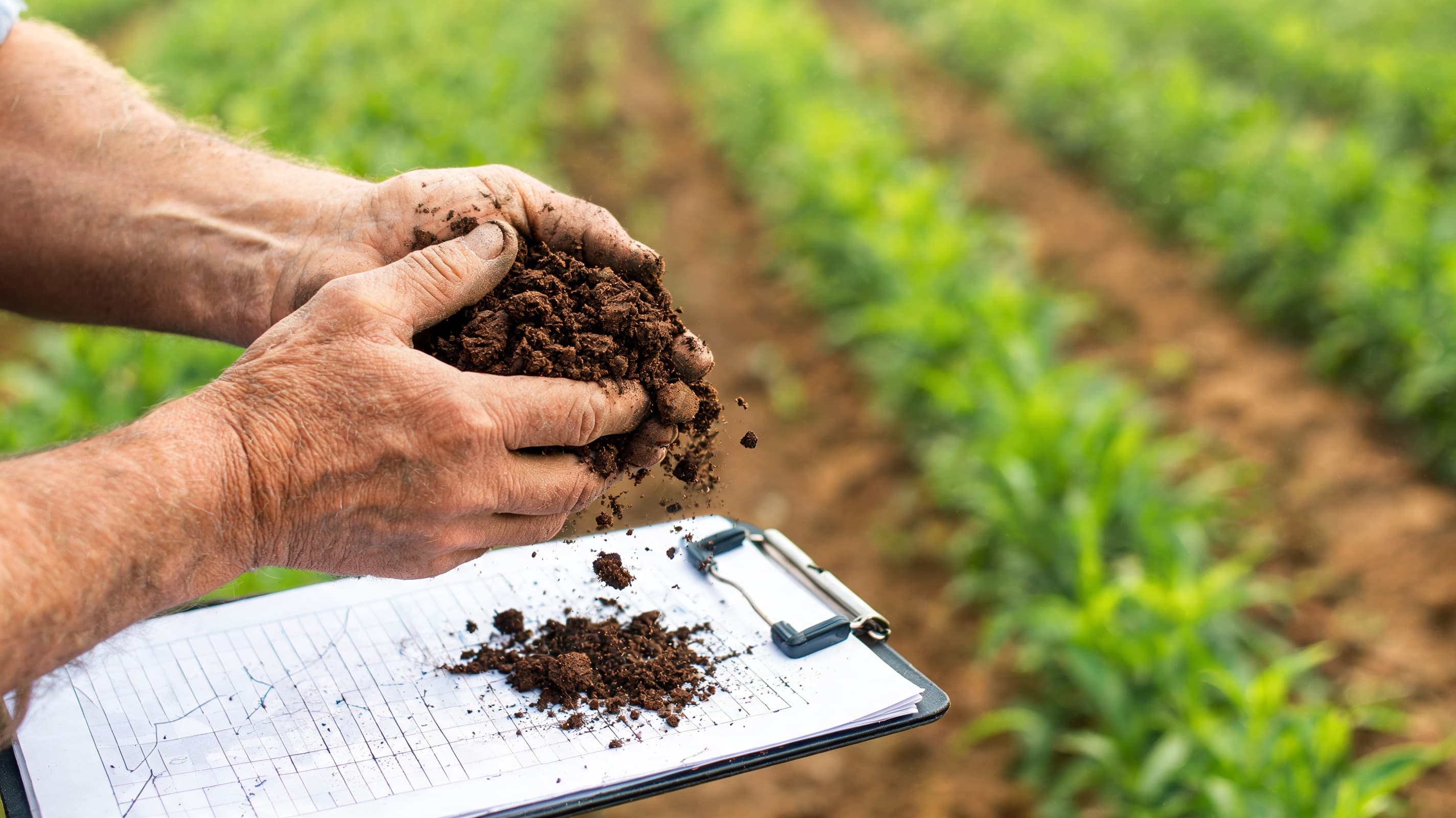
Most soils across the Mediterranean belt are calcareous, meaning they contain high levels of calcium carbonate. This raises soil pH. The root of the problem lies here.
High pH locks up iron
The plant-available form of iron is dissolved iron. As soil pH rises, iron converts into water-insoluble iron hydroxide and iron oxide compounds. These forms cannot be taken up by roots.
The practical result is this: even if a soil test shows "iron is sufficient," in calcareous soil most of that iron is closed off to the plant. The iron is present but locked.
The bicarbonate effect
The bicarbonate ion found in calcareous soils buffers the pH in the root zone and keeps it high. It also impairs the transport and use of iron inside the root. For this reason calcareous soil chlorosis is often called lime-induced chlorosis.
Why does it intensify in summer?
Iron chlorosis often becomes pronounced in late spring and early summer, during rapid growth. There are several reasons:
- Rapid shoot growth increases iron demand; supply cannot keep up.
- Soil temperature and over-irrigation reduce aeration in the root zone and increase bicarbonate buildup.
- Compacted, wet soils make iron uptake harder for the root.
This is why an orchard that looked healthy in winter can suddenly yellow in early summer.
Symptoms and Diagnosis
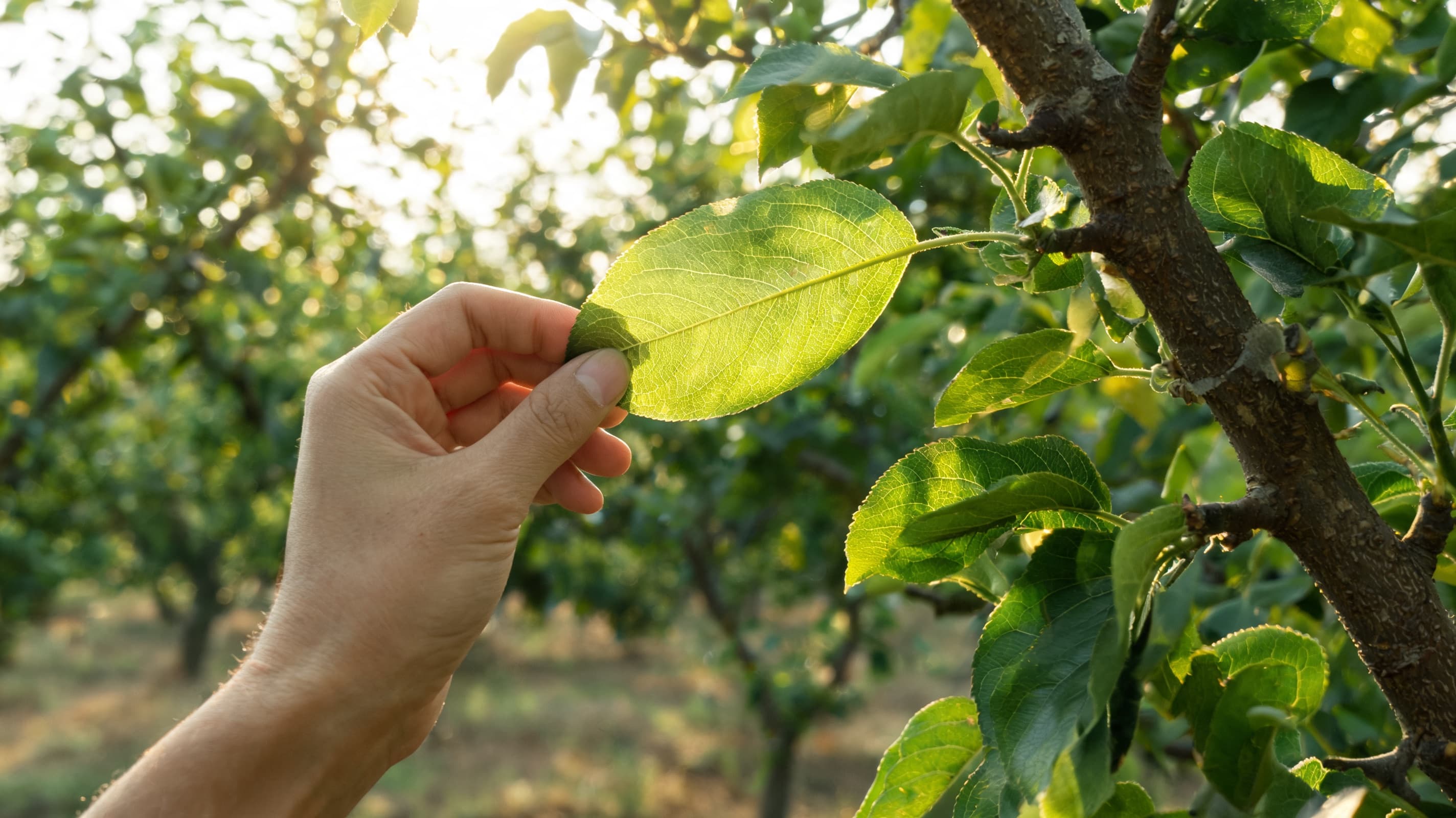
Correctly diagnosing iron chlorosis in the field is the first step to avoiding the wrong fertilization. Look for these signs:
- Yellowing on young leaves — the freshest leaves at the shoot tips.
- Interveinal yellowing — veins green, the areas between them yellow (in advanced cases the veins yellow too).
- In advanced cases the leaf color turns from yellow to cream-white, and leaf edges may dry.
- Smaller fruit and yield loss — in severe, prolonged cases.
Which crops are more sensitive?
Some species are markedly more prone to iron chlorosis in calcareous soil:
| Crop | Sensitivity | Note |
|---|---|---|
| Citrus (lemon, mandarin) | High | Classic problem in calcareous Mediterranean soils |
| Grape (vineyard) | High | Some rootstocks are more lime-sensitive |
| Olive | Medium | Generally tolerant, affected in heavy lime |
| Peach, apricot | High | Common in stone fruits |
Confirm the diagnosis first
Iron is not the only cause of yellowing. Nitrogen deficiency, magnesium deficiency, root suffocation and some diseases can produce a similar appearance. The most reliable way to confirm iron chlorosis is to evaluate leaf analysis and soil analysis together. Soil pH and active lime values show whether the chlorosis is lime-induced.
Chelate Solutions and the Difference Between Chelate Types
When ordinary iron sulfate (FeSO₄) is applied to calcareous soil, it usually does not work. The high pH quickly binds that iron and closes it off to the plant. This is where chelate technology comes in.
What is a chelate?
A chelate is an organic molecule that surrounds the iron ion and keeps it soluble in the soil. Thanks to the chelate, iron stays in the root zone without precipitating even at high pH, and remains available to the plant. A chelate can be thought of as a protective shell around the iron.
Chelate types and pH stability
Not all iron chelates are equal. The most critical difference between them is up to which pH range they can hold iron. This is a technical fact and the basis of correct product choice:
| Chelate type | Stable pH range | Effectiveness in calcareous soil |
|---|---|---|
| EDTA | Up to about pH 6 | Cannot hold iron at high pH, precipitates |
| DTPA | Up to about pH 7 | Moderate; works in limited lime |
| EDDHA | Up to about pH 9-10 | Most durable in high-pH calcareous soil |
The conclusion is clear: to solve iron chlorosis in calcareous, high-pH soils, EDDHA-chelated iron is preferred. Chelates such as EDTA are suitable for low-pH soils but cannot hold iron in the root zone in calcareous soil.
EDDHA chelates have one more quality indicator: the ortho-ortho isomer ratio. The ortho-ortho form is the most stably bound and longest-lasting form. An EDDHA iron with a high ortho-ortho ratio gives more reliable results in calcareous soil.
Markka's approach
Markka Genetik's iron-category products are formulated for exactly this problem:
- Ferroling — 6% EDDHA iron, 4.8 ortho-ortho chelated. An EDDHA-based solution for iron chlorosis in high-pH calcareous soils.
- Markka Ferron — 6% EDDHA iron, 4.8 ortho-ortho chelated. Designed for use in high-pH soils.
- Markka Fertiron — 6% EDDHA iron, 4.8 ortho-ortho chelated. An EDDHA formulation for iron supplementation in calcareous soil.
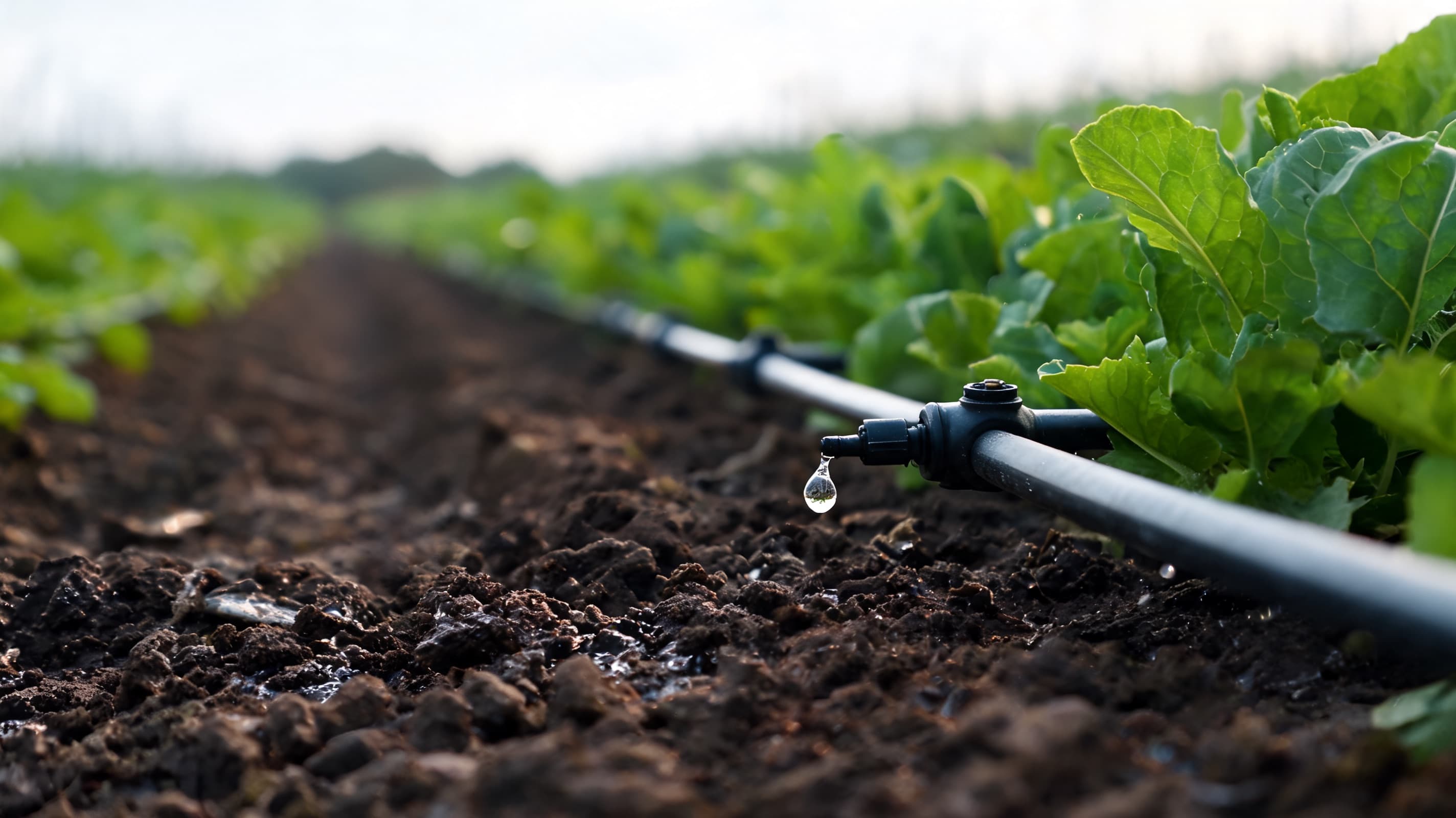
In all three, the high ortho-ortho ratio is aimed at holding iron in the root zone in calcareous soil. EDDHA iron chelates are delivered to the root zone through drip irrigation and soil application.
Another way to indirectly support iron uptake is to improve soil structure. Nutri Fulvic Zinc (O.M. 35%, fulvic acid 22%, amino acid 2%, zinc 4%) contributes to soil improvement with its organic matter and fulvic acid content; fulvic acid is a compound that plays a role in transporting micronutrients to the plant.
The application rate always depends on the product label, the crop, the severity of the chlorosis and the soil analysis. Determine the correct rate within the range stated on the product label and according to your soil analysis result. All Markka products are registered with the Republic of Türkiye Ministry of Agriculture and Forestry.
Common Mistakes
The most frequent field mistakes in fighting iron chlorosis are:
- Applying iron sulfate to calcareous soil. It binds quickly at high pH and is mostly wasted. The solution is EDDHA chelate.
- Choosing the wrong chelate type. EDTA chelate suits low pH; it cannot hold iron in calcareous soil.
- Relying on foliar spray only. Foliar application gives temporary relief, but the lasting solution in calcareous soil is EDDHA iron delivered to the root zone.
- Ignoring over-irrigation and drainage problems. Compacted, airless wet soil undermines iron uptake.
- Skipping diagnosis and applying iron to every yellowing. Yellowing may be caused by nitrogen or magnesium. Analyze first, apply second.
Prevention
Instead of treating iron chlorosis every year, it can be kept under control:
- Have soil and leaf analyses done regularly. Track pH and active lime values.
- Improve drainage and avoid over-irrigation. An aerated root zone supports iron uptake.
- Increase soil organic matter. Organic matter improves the supply of micronutrients to the plant.
- In sensitive species, choose lime-tolerant rootstocks (especially in vineyards and citrus).
- In high-pH orchards, plan iron supplementation on an EDDHA basis, and bring the application forward ahead of the critical growth period.
Conclusion
Leaf yellowing in calcareous soil is usually caused not by the absence of iron but by high pH locking the iron up. The right solution is to deliver EDDHA iron chelate — which stays stable in calcareous soil — to the root zone. Chelates such as EDTA and DTPA suit low and moderate pH; for high-pH calcareous soil, EDDHA is preferred.
Diagnose first, then choose the chelate type according to your soil's pH. To plan your orchard's iron needs correctly, you can write to us on WhatsApp for a free soil analysis and product recommendation.
Frequently Asked Questions
Is leaf yellowing always an iron deficiency? No. Iron chlorosis causes interveinal yellowing and appears first in young leaves. Nitrogen deficiency causes general yellowing in older leaves; magnesium deficiency causes interveinal yellowing, again in older leaves. Leaf and soil analysis are needed for a definitive diagnosis.
Does iron sulfate work in calcareous soil? Usually not. In calcareous, high-pH soil the iron in iron sulfate quickly converts to a water-insoluble form and becomes closed off to the plant. EDDHA-chelated iron is preferred in these soils.
What is the difference between EDTA, DTPA and EDDHA chelates? The difference is how high a pH they can hold iron up to. EDTA holds iron stable up to about pH 6, DTPA up to about pH 7, and EDDHA up to about pH 9-10. For calcareous high-pH soil, EDDHA is the most durable option.
Why does iron chlorosis become pronounced in early summer? Rapid shoot growth increases iron demand, while soil temperature and over-irrigation raise bicarbonate buildup and pH in the root zone. These conditions make iron uptake harder in calcareous soil.
Should I apply iron chelate to the leaf or to the soil? EDDHA iron chelates are generally applied to the root zone through drip irrigation or soil. Foliar application can give temporary support, but the lasting solution in calcareous soil is EDDHA iron delivered to the root zone. Follow the product label and your soil analysis for the application method and rate.