Blossom End Rot in Tomato: Calcium Deficiency and the Fix
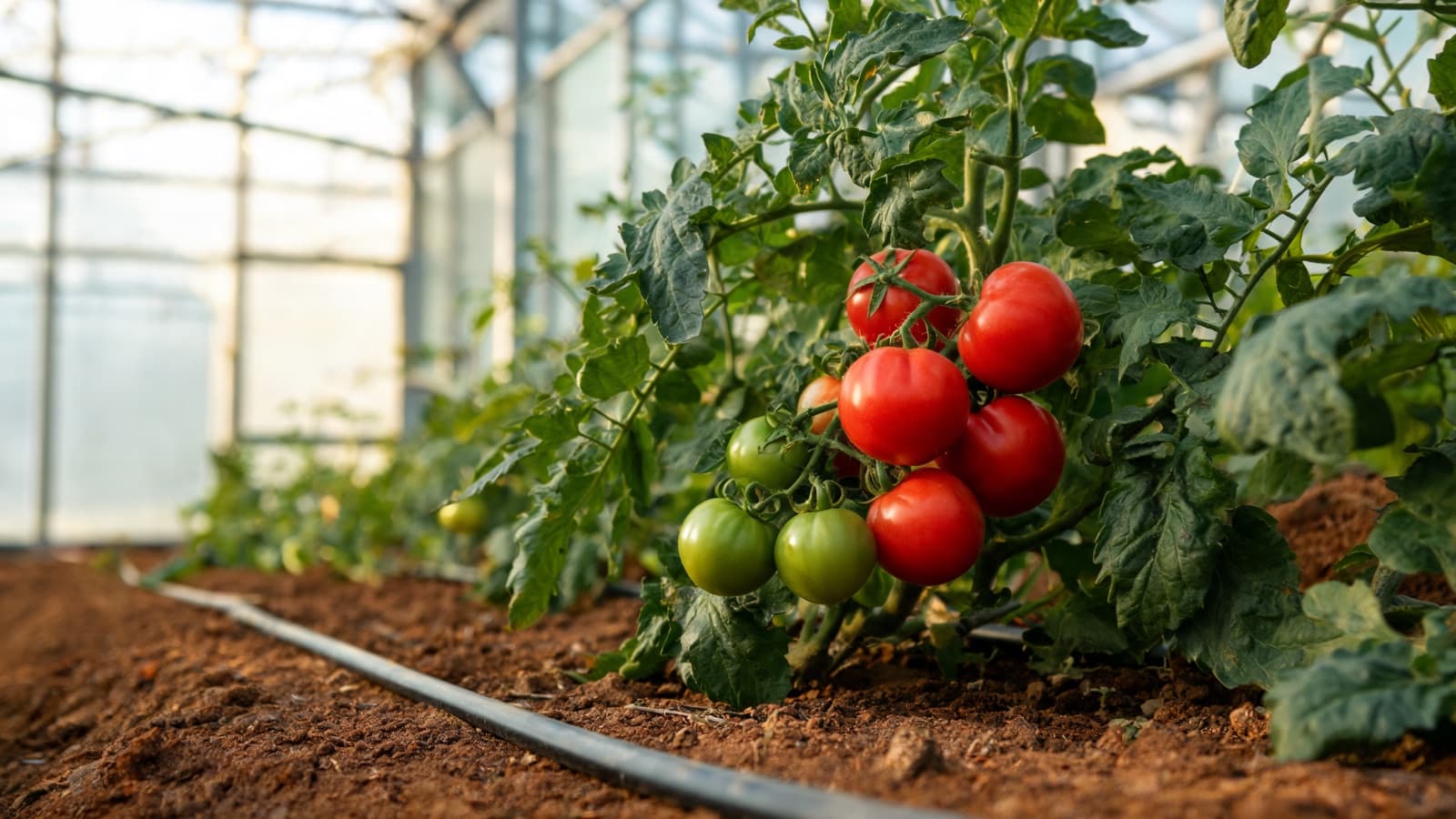
As fruit set accelerates in summer, many growers face the same picture in greenhouse and open-field tomato: a watery spot at the bottom of the fruit — the blossom end — that darkens into a sunken brown-black lesion. This is blossom end rot (BER). It is not a disease; it is a nutritional disorder. Understood correctly, it can be prevented in most cases.
This guide explains the real cause of blossom end rot, how to identify its symptoms, the calcium feeding approach, and the most common field mistakes. Our aim is not to hand you a fixed dose — the correct dose depends on your soil, your water, and the product label. Our aim is to help you make an informed decision.
What is blossom end rot?
Blossom end rot is the collapse of tissue at the blossom end (bottom) of the tomato fruit due to insufficient calcium. It also occurs in pepper, watermelon, squash, and eggplant, but it appears most frequently in tomato.
Calcium is the building block of the cell wall. When the fruit tip tissue does not receive enough calcium, cell walls weaken, tissue collapses, and the characteristic lesion forms. Here is the critical fact to remember:
Blossom end rot is usually caused not by a shortage of calcium in the soil, but by calcium failing to be transported to the fruit. Even with abundant calcium in the soil, if it cannot reach the fruit tip cells, the problem persists.
The science: why is it a transport problem?
Calcium is an immobile element within the plant. Once absorbed by the roots, it moves with water — that is, through the transpiration stream. Leaves drive most of the transpiration. The tip tissue of a fast-growing young fruit transpires very little, so it ends up last in line for calcium.
This mechanism explains the triggers we see in the field:
- Irregular irrigation: As the soil dries and rewets, root calcium uptake is interrupted. Calcium transport suffers most from this fluctuation.
- High heat and low humidity: Leaves pull water rapidly, leaving less for the fruit. Summer heat makes this a high-risk period.
- Excess nitrogen, especially ammonium: Rapid vegetative growth makes the fruit compete with leaves for calcium. Ammonium (NH₄⁺) also suppresses calcium uptake at the root.
- High salinity (high EC): Saline soil and irrigation water make it harder for roots to take up water and calcium.
- Root zone problems: Compacted soil or a diseased, weak root system reduces uptake.
Blossom end rot is therefore usually the result of several factors combining, not a single cause. That is why the solution comes from a correct approach, not from a single product.
Identifying the symptoms: accurate diagnosis
Distinguishing blossom end rot from other problems matters, because a wrong diagnosis leads to the wrong intervention.
| Sign | Blossom end rot | Confused with |
|---|---|---|
| Lesion location | Bottom tip of fruit (blossom end) | Top/side = sunscald or disease |
| Appearance | Watery spot first, then dark, sunken, dry | Fungal disease shows fuzzy/moldy tissue |
| First fruits | Common on the season's first clusters | — |
| Spread | Does not pass from fruit to fruit | Disease spreads plant to plant |
Key distinction: Blossom end rot is not contagious. It does not jump to a neighboring healthy fruit. If the lesion spreads from fruit to fruit or plant to plant, you are likely dealing with a fungal disease that requires a different intervention.
The Markka approach: fix the root cause, then feed
Markka Genetik's calcium feeding philosophy can be summarized in one sentence: First correct the transport conditions, then supply calcium in the right form. Simply spraying calcium on the leaves will not solve the problem permanently while irregular irrigation or excess nitrogen continues.
Markka's liquid calcium fertilizer range is designed for the different stages of the tomato crop. It is registered with the Republic of Türkiye Ministry of Agriculture and Forestry.
Calciphine — flowering and early fruit stage
A triple-layered formulation: calcium (CaO 15%) for cell-wall strength, boron (B 0.15%) to support calcium transport, and nitrate nitrogen (8% nitrate, 8% total N) to speed uptake. Boron plays a critical role here, because it is an element that helps calcium move within the plant. Can be applied as foliar and through drip irrigation.
Maxxim Plus — for nitrogen-free stages
A nitrogen-free calcium-boron formulation (CaO 12%, B 0.2%). It lets you supply calcium during periods when the plant already has enough nitrogen or when you do not want to fuel vegetative growth. A sensible choice when excess nitrogen is triggering blossom end rot.
Agrical Potassium-B-Co — fruit-filling stage
A composition for the filling stage after fruit set (CaO 11%, K₂O 7%, B 0.1%, Mo 0.03%, Co 0.03%, N 8%). Potassium for fruit quality and filling, calcium and boron so the fruit fills without cracking.
Master Comp Calcium Nitrate — soil/drip-based calcium source
Calcium nitrate in flake form (CaO 26%, 15% total N). Used to provide continuous calcium feeding to the root zone via drip irrigation. Markka Genetik produces its own calcium nitrate.
Which product suits which stage depends on your soil analysis, the EC value of your irrigation water, and the plant's phenological stage. Always determine the specific dose from the product label and your soil analysis results. When in doubt, consult an agronomist.
A step-by-step approach
Sequence matters in managing blossom end rot:
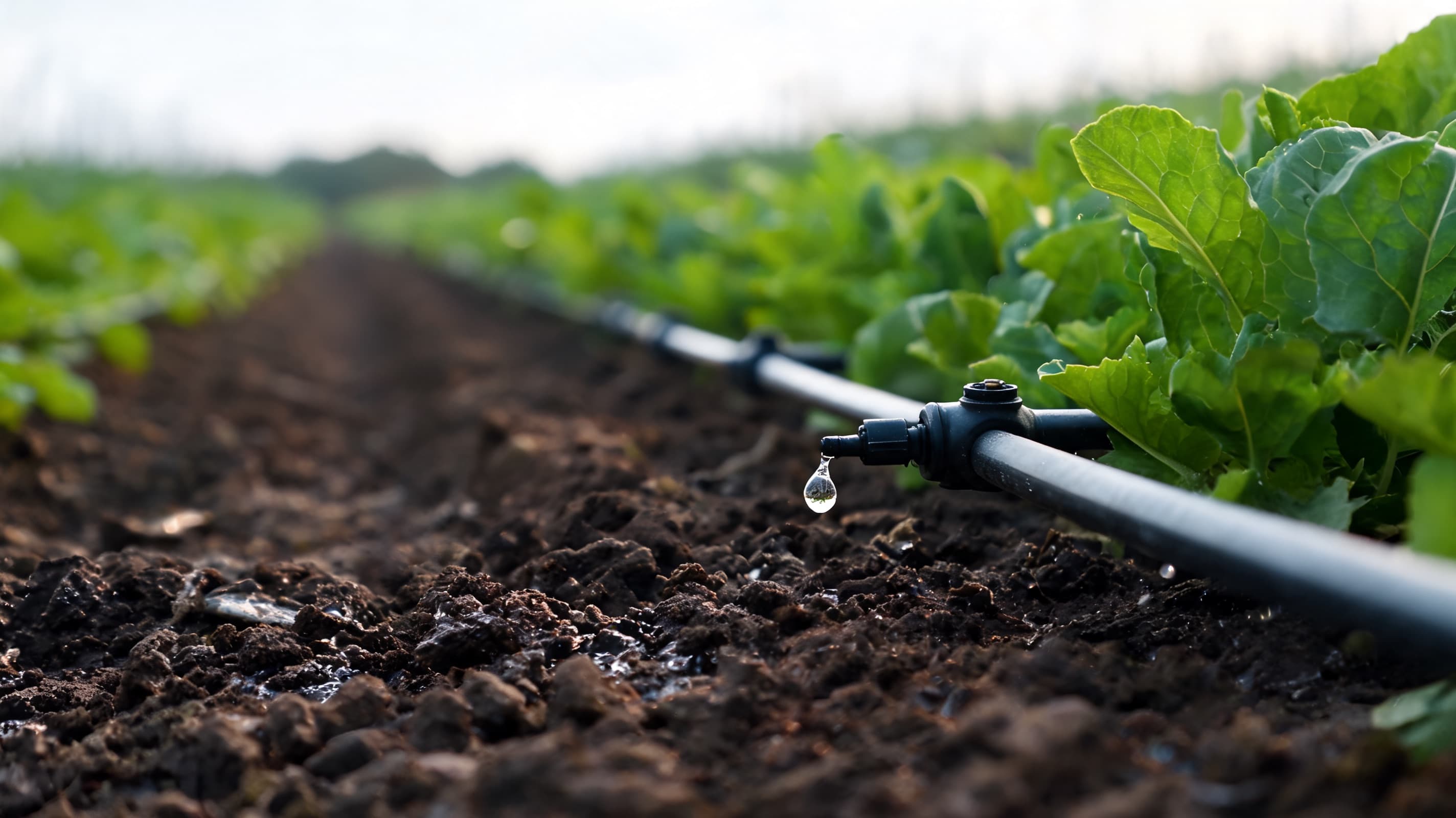
- Stabilize irrigation. Minimize soil moisture swings. Drip irrigation is more consistent than flood irrigation for calcium transport.
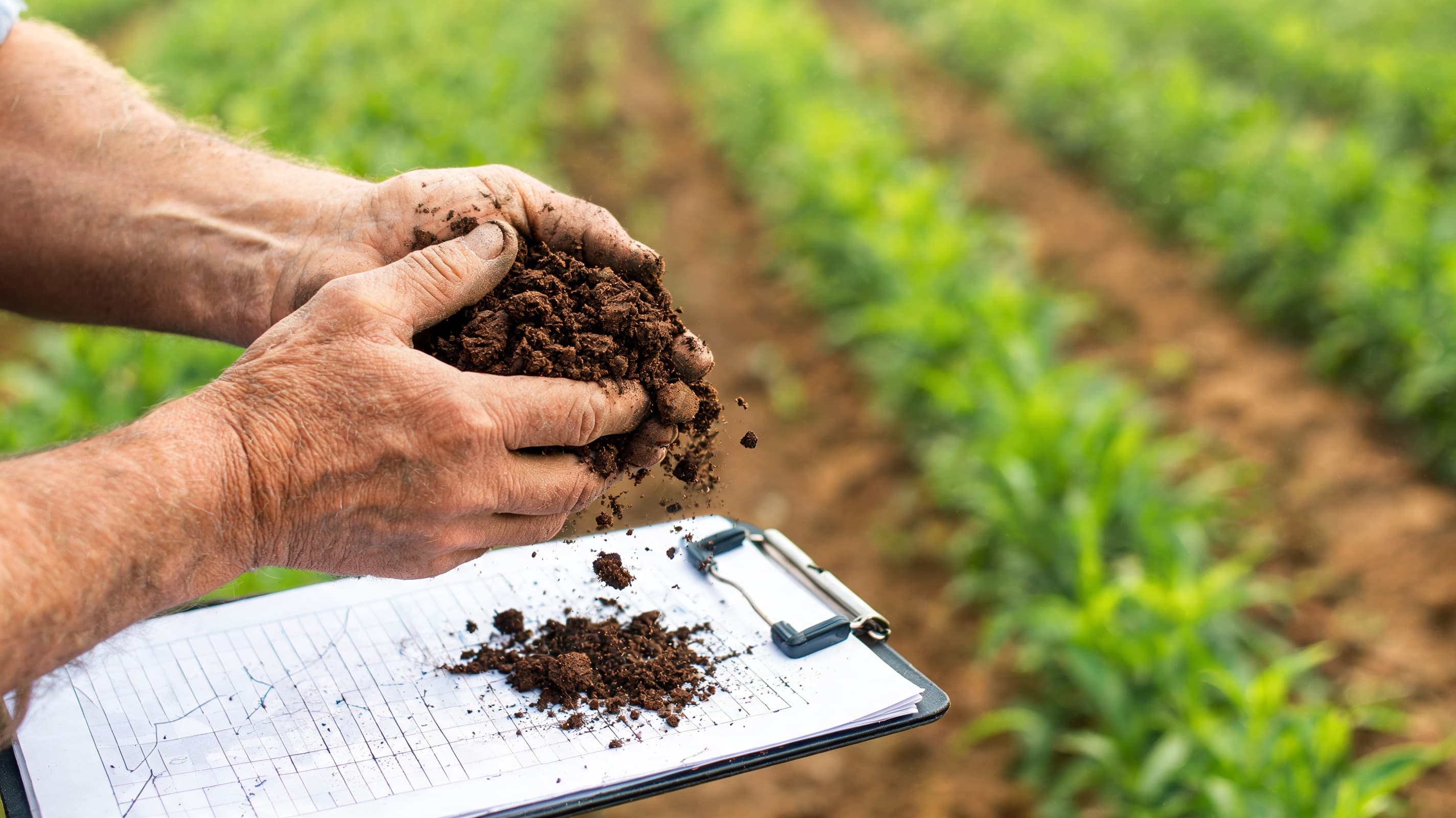
- Test soil and water. Determine calcium level, pH, and EC. This reveals whether the issue is a shortage or a transport problem.
- Review the nitrogen balance. Do not overdo it, especially with ammonium-heavy feeding. Nitrate-form nitrogen is safer in this period.
- Supply calcium in the right form. To the root zone via drip (e.g. Master Comp Calcium Nitrate) and/or to the leaf as foliar (e.g. Calciphine, Maxxim Plus) — at label dose.
- Do not neglect boron. Boron is the silent partner of calcium transport. Markka's calcium formulations are designed to include boron.
- Remove affected fruit. A rotted fruit will not recover; redirect the plant's energy to sound fruit.
Apply foliar treatments in the cooler hours (early morning or evening); the midday heat increases leaf burn risk and reduces absorption.
Common mistakes
- Expecting "I added calcium to the soil, so it will resolve." If the problem is transport, adding more calcium to the soil alone will not help. Fix irrigation and nitrogen first.
- Relying on foliar calcium only. Calcium sprayed on leaves transports to the fruit only to a very limited degree; the fruit's real need is stable root feeding. Foliar is supportive, not a standalone solution.
- Ignoring irregular irrigation. This is the most overlooked yet most influential factor.
- Failing to notice excess nitrogen. A plant with lush, dark-green foliage but rotting fruit is often showing a nitrogen surplus.
- Confusing it with cracking. Fruit cracking is a separate issue (usually sudden water uptake), though it sometimes appears alongside BER under the same stress conditions.
Frequently Asked Questions
Is blossom end rot contagious? No. Blossom end rot is not a disease but a physiological disorder caused by calcium transport. It does not spread from fruit to fruit or plant to plant.
Will a rotted fruit recover? No. Once a lesion forms on a fruit, that tissue does not return. The intervention aims to protect fruit that has not yet set or has just set.
My soil has calcium — why is it still rotting? Because the problem is usually not a calcium shortage but calcium failing to reach the fruit. Irregular irrigation, high heat, high salinity, or excess nitrogen block transport. A soil analysis clarifies this difference.
Is foliar fertilizer enough on its own? Usually not. Foliar calcium gives fast support but transports to the fruit only to a limited degree. The real solution is stable feeding from the root zone and a steady irrigation regime; foliar complements it.
What is boron's role here? Boron is an element that helps calcium move within the plant. Feeding calcium together with boron supports transport. This is why Markka formulations such as Calciphine and Maxxim Plus include calcium and boron together.
Conclusion
Blossom end rot in tomato is usually not a calcium shortage but a calcium transport problem. Grasping that distinction is the key to the right intervention: first correct irrigation and the nitrogen balance, then supply calcium-boron feeding in the right form. Markka Genetik's calcium range — Calciphine, Maxxim Plus, Agrical, and Master Comp Calcium Nitrate — is produced to meet the calcium needs of tomato across its different stages.
For a feeding approach tailored to your field or greenhouse, follow the product label and your soil analysis. If you are unsure which formulation suits which stage, consult an agronomist or write to us on WhatsApp.