Potassium Deficiency: Symptoms, Fruit Quality and the Right Potassium Source
The fruit stayed small, the color never fully set, the taste fell short of what you expected, and shelf life dropped. The leaf margins turned brown as if scorched. Most growers blame drought or sunburn. Yet behind this picture there is usually a single shortfall: potassium.
Potassium (K) is the plant's engine for yield and quality. Nitrogen drives growth, phosphorus builds roots and flowers — but it is potassium that fills the fruit, sweetens it, colors it, and makes it durable. In this article we cover potassium's role in the plant, how to diagnose deficiency in the field, which conditions trigger it, and the most critical decision of all — choosing the right potassium source — from an agronomist's perspective. On dosing there is one rule: every rate depends on soil analysis and the product label.
The role of potassium in the plant: why it's called the "quality element"
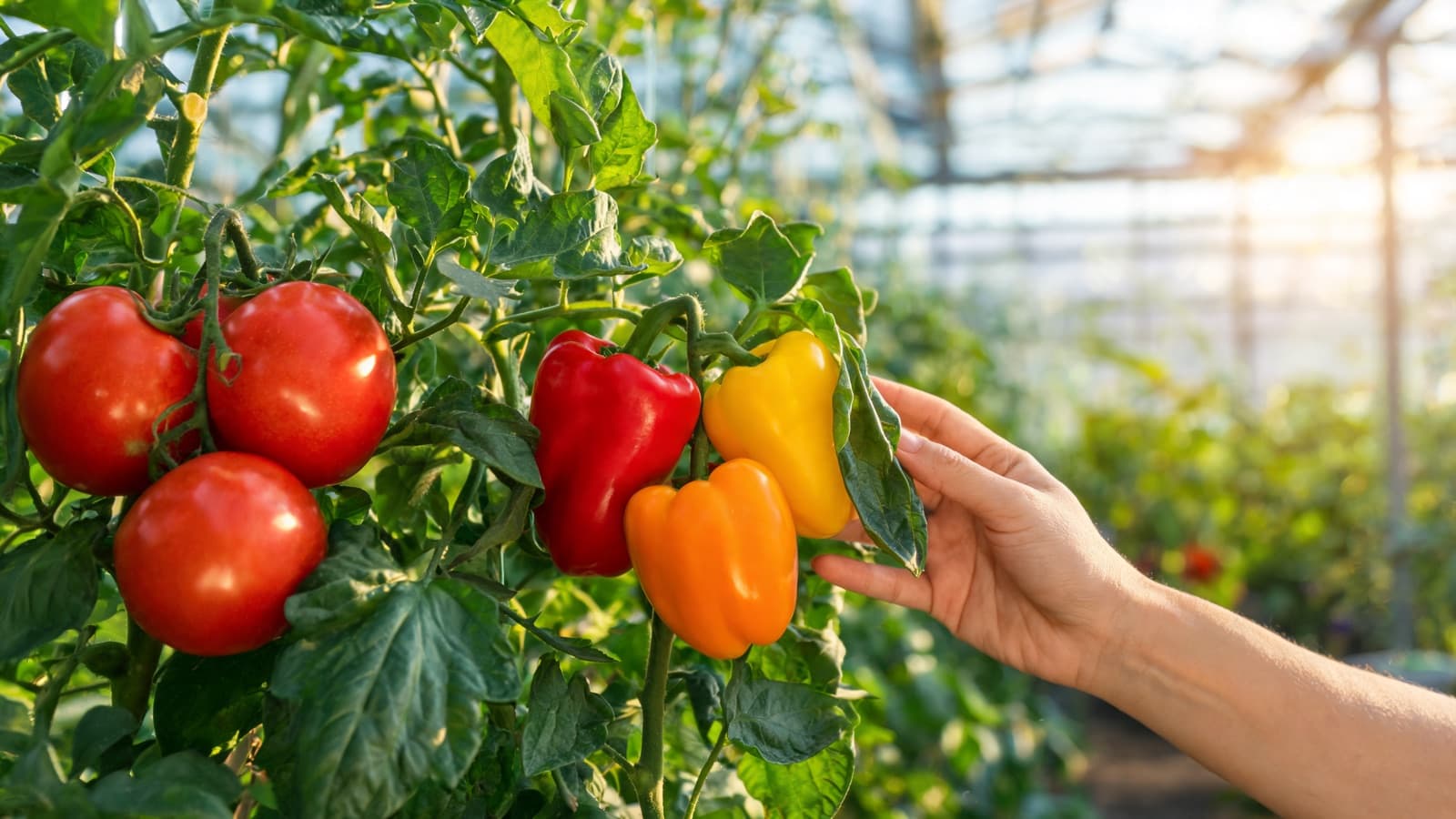
Potassium is not a building block inside the plant; it does not enter the cell wall or proteins. Instead it works as a regulator and carrier. That is why its deficiency shows up directly as visible quality loss. Its four core functions: water balance and stomatal control (water-use efficiency, drought and heat tolerance); sugar transport and phloem loading (if sugar stays in the leaf, brix falls); fruit size and fill; color, aroma and durability (shelf life, transport resilience). In short: potassium is the element that converts field yield into market quality. The color, firmness and durability of export fruit are determined by potassium.
Deficiency symptoms: a story that starts in the older leaves
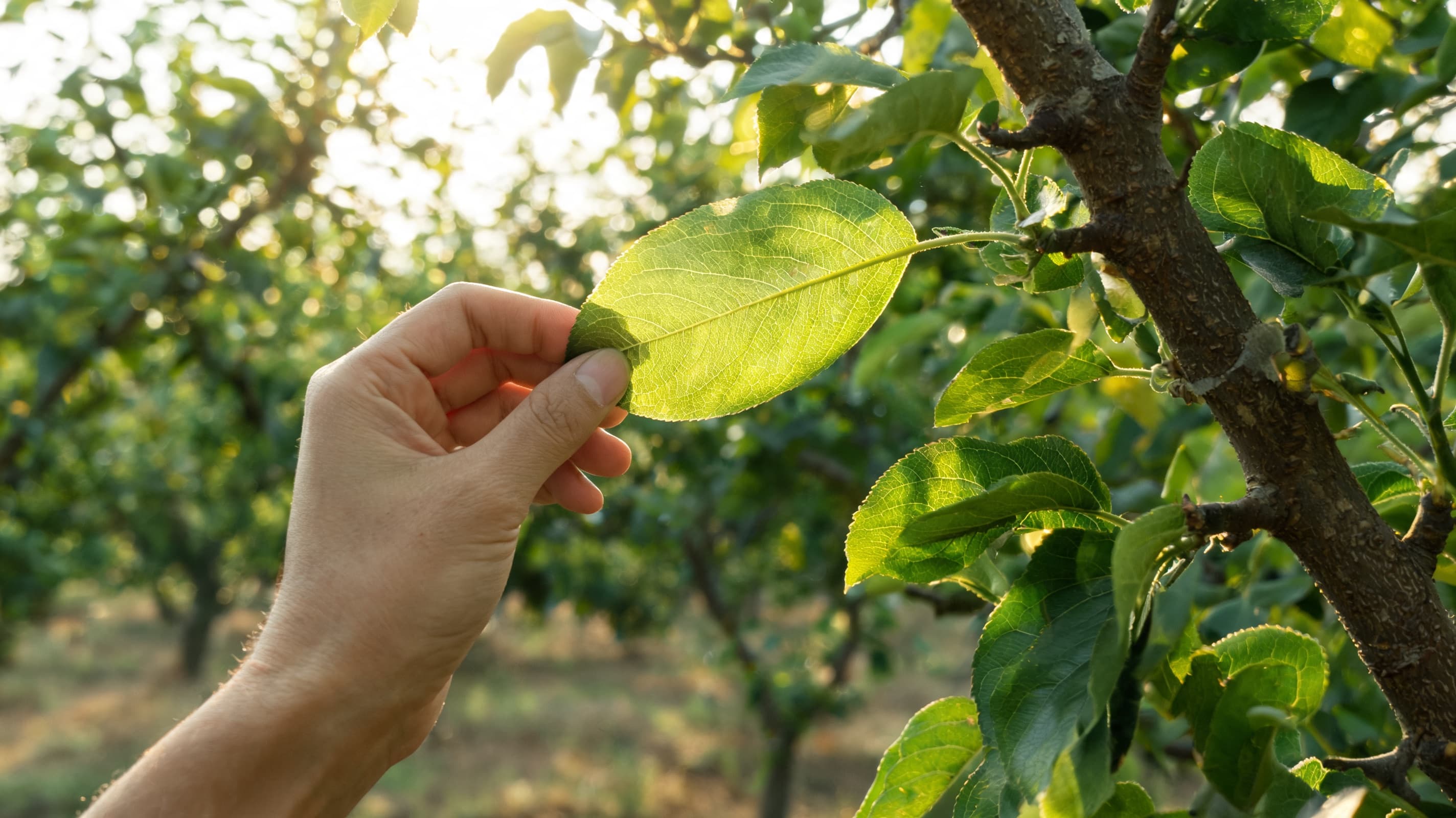
Potassium is a mobile element — the most important clue for diagnosis. The plant pulls the element from older leaves and moves it to new leaves and fruit, so symptoms appear first on the lower, older leaves. Typical symptoms: marginal leaf scorch (marginal necrosis) — the edge and tip yellow first, then turn brown and dry, while the midrib stays green for a while (the classic signature); inward curling of the leaf margin; weak, thin stems and lodging tendency (in cereals); small, pale, low-sugar fruit; uneven ripening (blotchy tomato and pepper, uneven berry fill in grapes). Diagnostic rule: if the symptom starts in older leaves, suspect a mobile element such as potassium, calcium or magnesium; if it starts in new leaves, suspect an immobile element such as iron or zinc. Visual diagnosis is always a hypothesis; the final decision comes from leaf and soil analysis. It can be confused with magnesium deficiency or salt stress.
Conditions that trigger deficiency: why did it show up in this field?
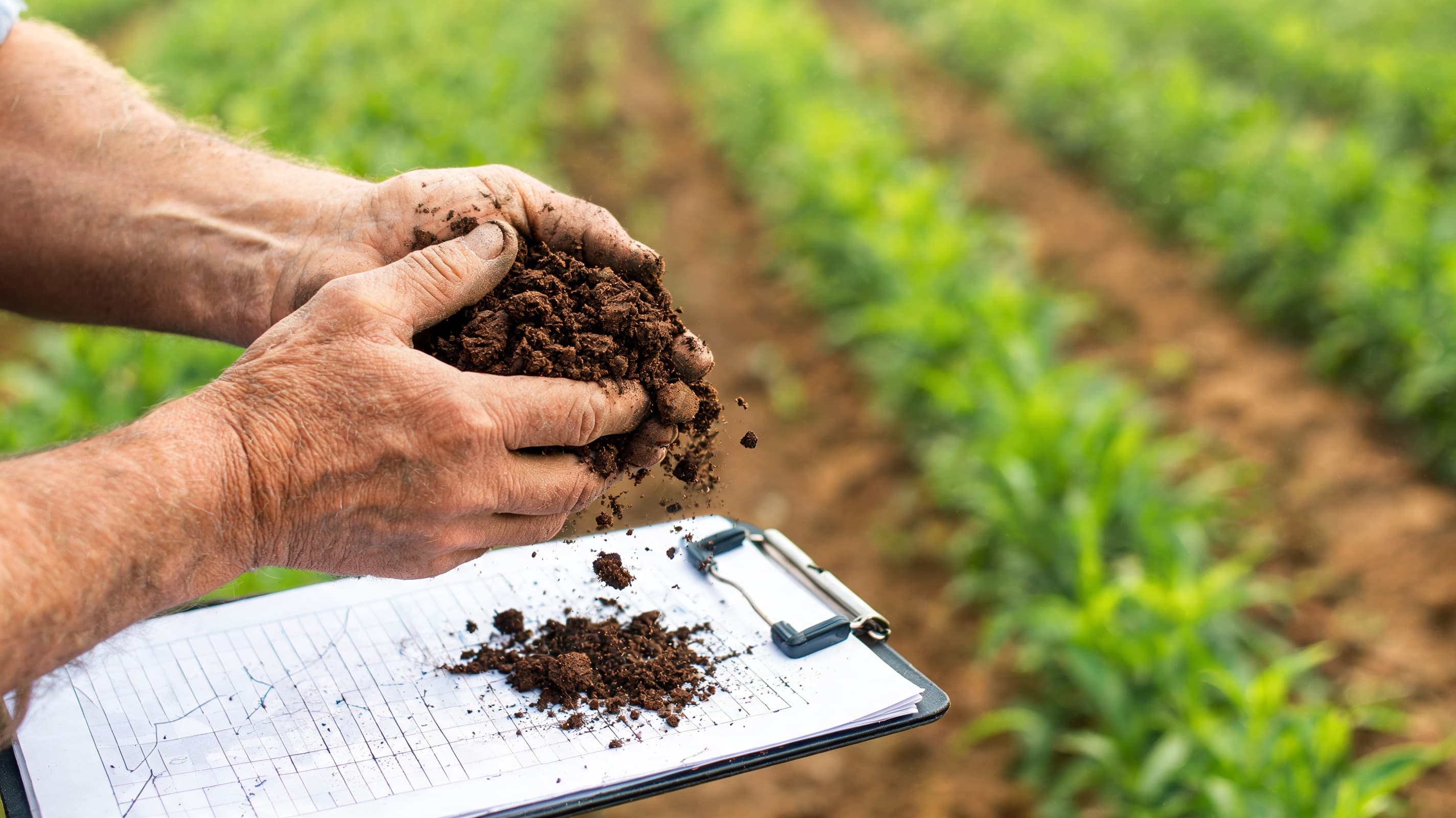
Often it is not because potassium is "absent" from the soil, but because the plant cannot reach it. Triggers: (1) Sandy or light soils — low CEC means potassium is not held and leaches out; split application makes sense. (2) High yield and rapid fruit-fill period — demand peaks, creating temporary or hidden deficiency. (3) Cation antagonism — K, Ca, Mg and NH₄⁺ compete at the root surface; excess Mg or Ca suppresses potassium uptake, while excess K creates magnesium deficiency; fertilization means managing the K–Ca–Mg balance. (4) Dry or low-moisture root zone — potassium reaches the root by diffusion, which slows as the zone dries. (5) Unsuitable pH and salinization — root health and selective uptake break down. Practical rule: potassium deficiency is usually not a supply problem but an access and balance problem; the solution starts with soil analysis.
Choosing the right potassium source: the most critical decision
The real technical decision is: which potassium source? Each source brings a different "second ion" with it, and that ion may suit your crop or damage it.
| Source | Chemistry | Second ion it brings | Where it stands out |
|---|---|---|---|
| Potassium sulfate (SOP) | K₂O + sulfur (SO₃) | Sulfur; chloride-free | Chloride-sensitive crops, aroma/quality, saline conditions |
| Potassium nitrate | K₂O + nitrate nitrogen (NO₃) | Immediately available nitrogen | Fast effect during fruit fill |
| Potassium chloride (MOP) | K₂O + chloride (Cl) | Chloride | Chloride-tolerant, low-cost field crops |
Potassium sulfate (SOP): Chloride-free — the first choice for chloride-sensitive crops (grape, citrus, strawberry, tomato, pepper, potato, tobacco). Sulfur supports aroma and protein/oil synthesis. Salinity risk is relatively low. In the Markka range, Aviator (K₂O 25%, SO₃ 42%) is a sulfur-bearing, chloride-free potassium that contributes to aroma, oil and fiber quality. Potassium nitrate: Delivers potassium together with directly available nitrate nitrogen; it helps during the period of rapid fruit fill; nitrogen must be balanced (risk of excess vegetative push). In the Markka range, Master Comp Potassium Nitrate (13-0-46) is pure, fully water-soluble and suited to fertigation. For emphasizing potassium while keeping nitrogen low in the fruit period, Adviser K 3-0-31 (N 3%, K₂O 31%) supplies energy without pulling the plant out of the generative phase. Potassium chloride (MOP): The highest K concentration and the most economical; but on chloride-sensitive crops it causes leaf burn, quality loss and salt buildup. It can be used on chloride-tolerant field crops. Finisher concentrate potassium: High-concentration potassium for color, aroma, taste and sugar close to harvest. In the Markka range, VIP K 31 (K₂O 31%) is a concentrated finisher focused on the final ripening and quality stage.
Fertigation and foliar application: two complementary methods
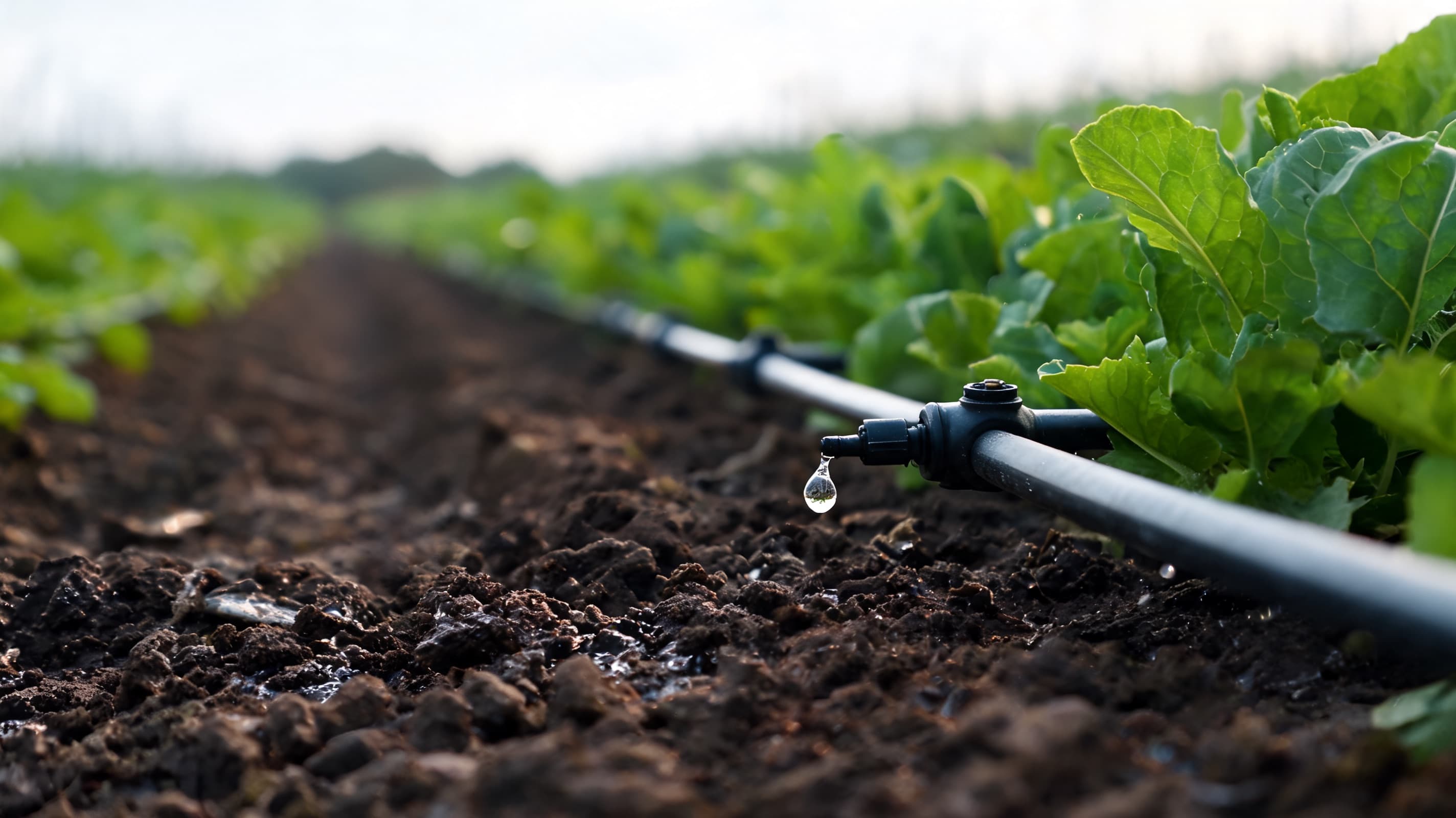
The two are not rivals but complements. Fertigation (drip): the main entry route; total demand cannot be met through the leaf alone. Fully water-soluble sources (potassium nitrate, soluble sulfate forms, MKP) are delivered into the drip line. Monitor: EC (salt load — prefer split, regular applications over a sudden high dose), pH (generally 5.5–6.5), compatibility (do not mix sulfate or phosphate with calcium fertilizers in the same tank — precipitation). Phosphorus-plus-potassium sources such as Markka MKP 0-52-34 can be added to the program during rooting, flowering and fill. Foliar: a fast but limited supplement; useful for correcting temporary deficiency during fruit fill and for support under stress. Rules: spray in cool hours (morning or evening), avoid application in heat, and run a small-area compatibility test first. In both methods the rate follows the label and the analysis; a fixed gram figure is not advised.
Common mistakes
Noticing the symptom too late (once margin scorch appears the process has already advanced — test before the critical period). Not matching the source to the crop (a chloride-bearing source on a chloride-sensitive crop). Chasing a single element (excess K load creates Mg deficiency; K–Ca–Mg is one system). Foliar feeding in heat (burn and inefficient uptake). Not monitoring EC and pH (salt buildup, root stress). Dosing without analysis (the "the neighbor applied this much" approach).
FAQ
What are the symptoms of potassium deficiency? — Yellowing and brown scorch on the margins and tips of older leaves (marginal necrosis); weak stems, small and pale fruit, low sugar, uneven ripening. Because it is a mobile element, symptoms appear first on older leaves. How does potassium deficiency affect fruit quality? — It regulates sugar transport, water uptake by the fruit, and color and aroma formation; under deficiency the fruit is small, brix is low, color is pale, and shelf life and transport resilience drop. Potassium sulfate or chloride? — For chloride-sensitive crops (grape, citrus, strawberry, tomato, pepper, potato) use chloride-free sulfate. On tolerant field crops chloride can be economical. The decision rests on soil analysis and chloride tolerance. Is there K–Mg antagonism? — Yes, they compete at the root surface; excess K triggers magnesium deficiency, and excess Mg suppresses K uptake; K–Ca–Mg are managed together. Fertigation or foliar? — Meet the main demand through fertigation; foliar is fast but complementary (support during fruit fill and stress). How much should I apply? — The rate depends on the crop, stage, analysis and label; a fixed gram figure is not correct. Analysis first, then the label rate. Why is sandy soil different? — Potassium is not held and leaches out; split application reduces leaching and provides continuous access.
Conclusion
Potassium converts field effort into market quality: it determines size, brix, color and durability. Deficiency shows early as margin scorch on older leaves; the final diagnosis comes from soil and leaf analysis. The heart of the solution is the right source: chloride-free sulfate on chloride-sensitive crops, nitrate-supported formulas in the fruit period, and concentrated potassium at the finish. The rate comes from analysis, not from the neighbor. At Markka Genetik we position our potassium sources (chloride-free Aviator, water-soluble Master Comp Potassium Nitrate, generative Adviser K, finisher VIP K 31) within a program tailored to your soil and crop. Registered with the Republic of Türkiye Ministry of Agriculture and Forestry and produced in Antalya, we ship to 30+ countries. Share your soil analysis and we will build a crop-specific potassium strategy.
CTA: Explore products · Request expert consultation · Get in touch / Get a Quote