Fertigation — A Step-by-Step Guide to Drip Fertilization
Fertilizer cost is among the three largest expenses in modern agriculture. Yet for most growers, the question — how much of the applied fertilizer actually reaches the plant? — remains unanswered.
The answer: in traditional soil broadcasting, only 30-50% of fertilizer reaches the plant — the rest is lost to leaching, evaporation, and clay binding. Fertilization through drip irrigation — fertigation — raises this to 85-95%.
This guide explains in clear language what fertigation is, how to calculate it, which fertilizers it uses, and common mistakes. At Markka Genetik, 60% of our product portfolio consists of water-soluble formulations specifically designed for fertigation.
What Is Fertigation?
Fertigation = Fertilizer + Irrigation.
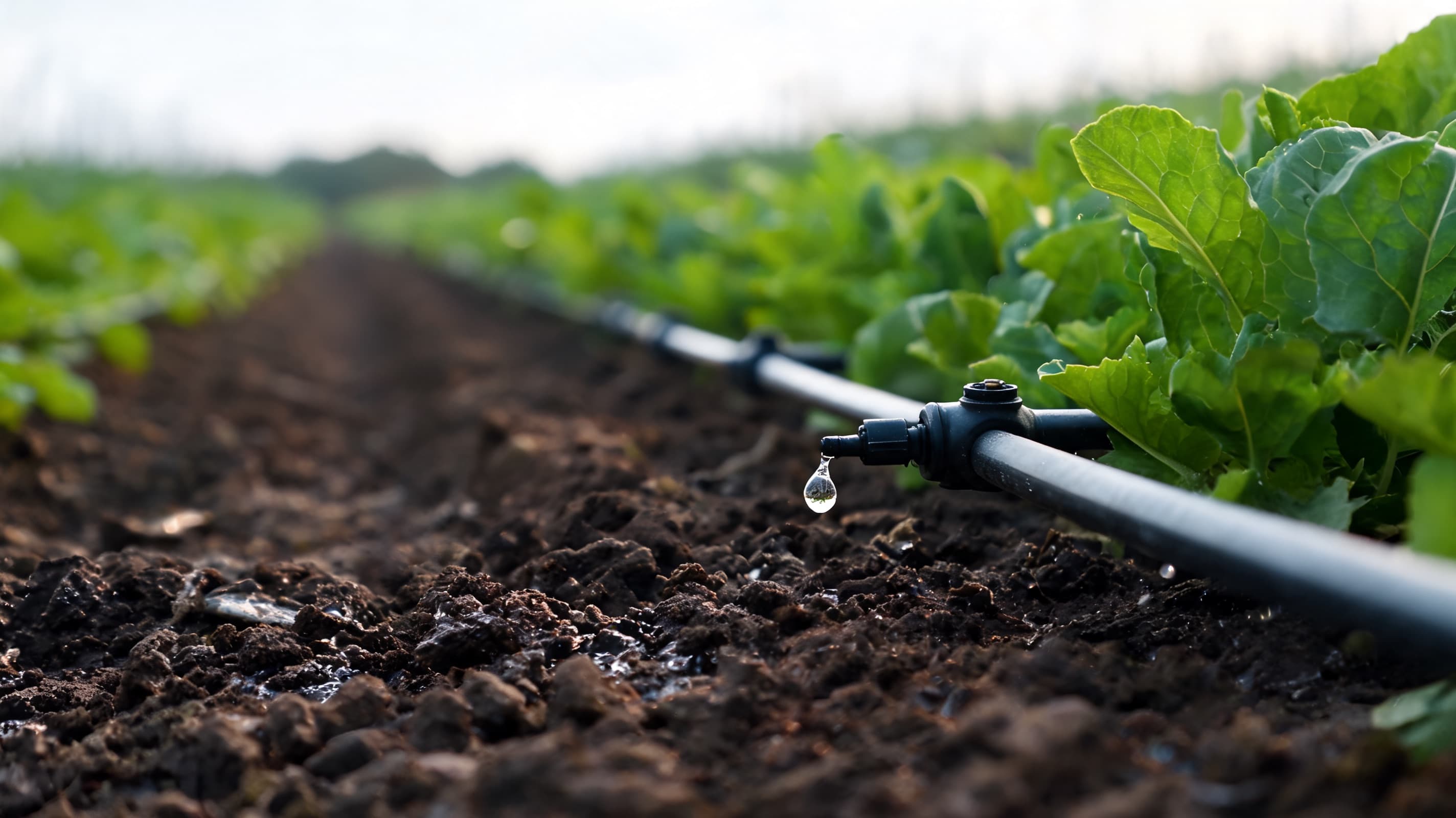
It is the method of injecting soluble fertilizer into the drip irrigation water — delivering nutrients directly to the plant root zone in small, continuous doses. Developed in Israel in the 1960s, fertigation is now the standard tool of modern greenhouse, open-field drip, and precision agriculture worldwide.
Advantages Over Traditional Fertilization
| Dimension | Traditional | Fertigation |
|---|---|---|
| Fertilizer efficiency | 30-50% | 85-95% |
| Labor | High (each application is field work) | Low (automated) |
| Water savings | — | 30-50% |
| Salinity risk | High (surface accumulation) | Low (root zone flushed) |
| Precision dosing | Difficult | Very precise (mL accuracy) |
| Stress management | Limited | Rapid intervention possible |
Core Components of a Fertigation System
A fertigation setup may be simple or complex, but every system includes four core components:
1. Fertilizer Tank
Storage capacity for concentrated fertilizer solution. Typically 100-1000 L, stainless steel or food-grade plastic. In greenhouse scale, two 200 L tanks are common (A and B tanks — to separate incompatible fertilizers).
2. Injector (Venturi or Dosing Pump)
The component injecting fertilizer into irrigation water. Two main types:
- Venturi injector: Uses water pressure differential, requires no electricity, inexpensive but low precision
- Dosing pump: Electric, programmable, highly precise — the standard in modern greenhouses
3. Mixing and Filter Unit
Ensures fertilizer solution mixes thoroughly with irrigation water; particle filter prevents emitter clogging.
4. Emitters
Pressure-compensated emitters of 2-4 L/hour per plant are preferred. Uniform flow is critical — a section of the field receiving more or less fertilizer than another reduces yield consistency.
Which Fertilizers Work for Fertigation?
The primary requirement of a fertigation fertilizer is 100% (or very high) water solubility. Conventional DAP, urea, compound NPK granules are not suitable — they clog emitters and form residues in the system.
Suitable fertilizer categories for fertigation:
Liquid NPK Solutions
Pre-dissolved, 100% dispersible in water, do not clog tanks or emitters. From the Markka portfolio:
- Markka AN — ammonium nitrate liquid nitrogen source
- Markka UAN — urea-ammonium nitrate
- VIP K-31 — potassium-rich liquid
Water-Soluble NPK Powders
Not granular, crystalline structure — suitable for drip. From the Markka portfolio:
- Master Calcium Nitrate
- Master Nitrogen DCD — slow-release nitrogen
- Master Potassium Nitrate
- Master Magnesium Sulfate
- Markka MKP — mono-potassium phosphate (P + K)
- Markka Urea Phosphate — urea phosphate (N + P)
Chelated Micro-Elements
Mandatory for Fe, Mn, Zn, Cu application on high-pH soils:
- Ferroling, Ferron, Fertiron — Fe chelate
- Zinconit, Zytra — Zn products
- Sell-X Power — Mn product
Liquid Biostimulants
System additives during stress periods:
- Algisea, Algacytokin — seaweed extracts
- Diamente, Isobau — amino acids
- Doca-22, Nexxus — humic/fulvic
Liquid Calcium (Special Note)
Delivering calcium via drip is delicate work — it precipitates with phosphates and sulfates in the same tank. Markka Calciphine, Maxxim Plus, Pascal Plus, Agrical are formulated specifically for fertigation.
A and B Tank System — The Science of Preventing Precipitation
Some fertilizer combinations precipitate when they meet in water — for example, calcium + phosphate → calcium phosphate precipitate; calcium + sulfate → gypsum.
This problem is resolved with two separate tanks:
Tank A: All calcium-containing fertilizers
- Calcium nitrate
- Liquid calcium products (Calciphine, Maxxim, Pascal)
- Chelated micro-elements
Tank B: Phosphate- and sulfate-containing fertilizers
- Mono-potassium phosphate (MKP)
- Magnesium sulfate
- Sulfate-form micro-elements
These two tanks mix in the main irrigation line just before reaching emitters — over this distance, no precipitation forms before the plant receives it.
Building a Fertigation Program Step by Step
Step 1: Determine Target EC and pH
Target EC by plant type and growth stage:
| Crop / Stage | Target EC (mS/cm) |
|---|---|
| Establishment | 1.0 – 1.5 |
| Vegetative growth | 1.8 – 2.2 |
| Flowering | 2.0 – 2.5 |
| Fruit ripening | 2.2 – 3.0 (tomato, pepper, etc.) |
Target pH generally remains in the 5.5 – 6.5 range.
Step 2: Calculate Plant Element Demand
Each plant's weekly element demand is tabulated in literature. Example: greenhouse tomato during flowering, daily element demand (approximate):
| Element | mg/plant/day |
|---|---|
| Nitrogen (N) | 200-300 |
| Phosphorus (P) | 40-80 |
| Potassium (K) | 300-500 |
| Calcium (Ca) | 100-200 |
| Magnesium (Mg) | 30-60 |
Step 3: Fertilizer Selection and Mixing Calculation
Select fertilizer to meet target element, calculate dose by its content percentage.
Example: Master Potassium Nitrate (KNO₃ → 13% N, 46% K₂O content). If targeting 400 mg K daily per plant:
- 400 mg K ÷ 0.46 (percent) = ~870 mg KNO₃ fertilizer required
- For 1000 plants in greenhouse → 870 g KNO₃ daily
- Dissolved in 5 m³ irrigation water and distributed to 1000 plants → tank concentration appropriate
Note: This is a simplified example. In practical calculation, refer to nutrient program tables or consult an agronomist.
Step 4: pH and EC Correction
If mixed fertilizer solution pH is outside target range:
- High pH (>6.5) → lower with phosphoric or nitric acid
- Low pH (<5.5) → raise with potassium hydroxide
If EC is below target, increase concentration; if above, dilute.
Step 5: Prepare Seasonal Program
A table showing what fertilizer goes into which tank each week, season-long. This table can be programmed into automatic dosing pumps.
Five Common Mistakes in Fertigation
- Single tank, all fertilizers together. This mistake causes calcium precipitation, emitter clogging, and fertilizer losses. A/B tank separation is the foundation of modern fertigation.
- Skipping EC monitoring. Monitoring the difference between stock solution EC and emitter outflow EC indicates whether the system is functioning correctly. Minimum twice-weekly measurement.
- Applying "maximum dose" at season start. Seedling and young plant EC tolerance is low. Excessive dosing causes root burn. Seasonal EC programs must increase gradually.
- Neglecting filter cleaning. Even the highest-quality liquid fertilizer can contain micro-particles. Filter clogging = emitter clogging = season loss.
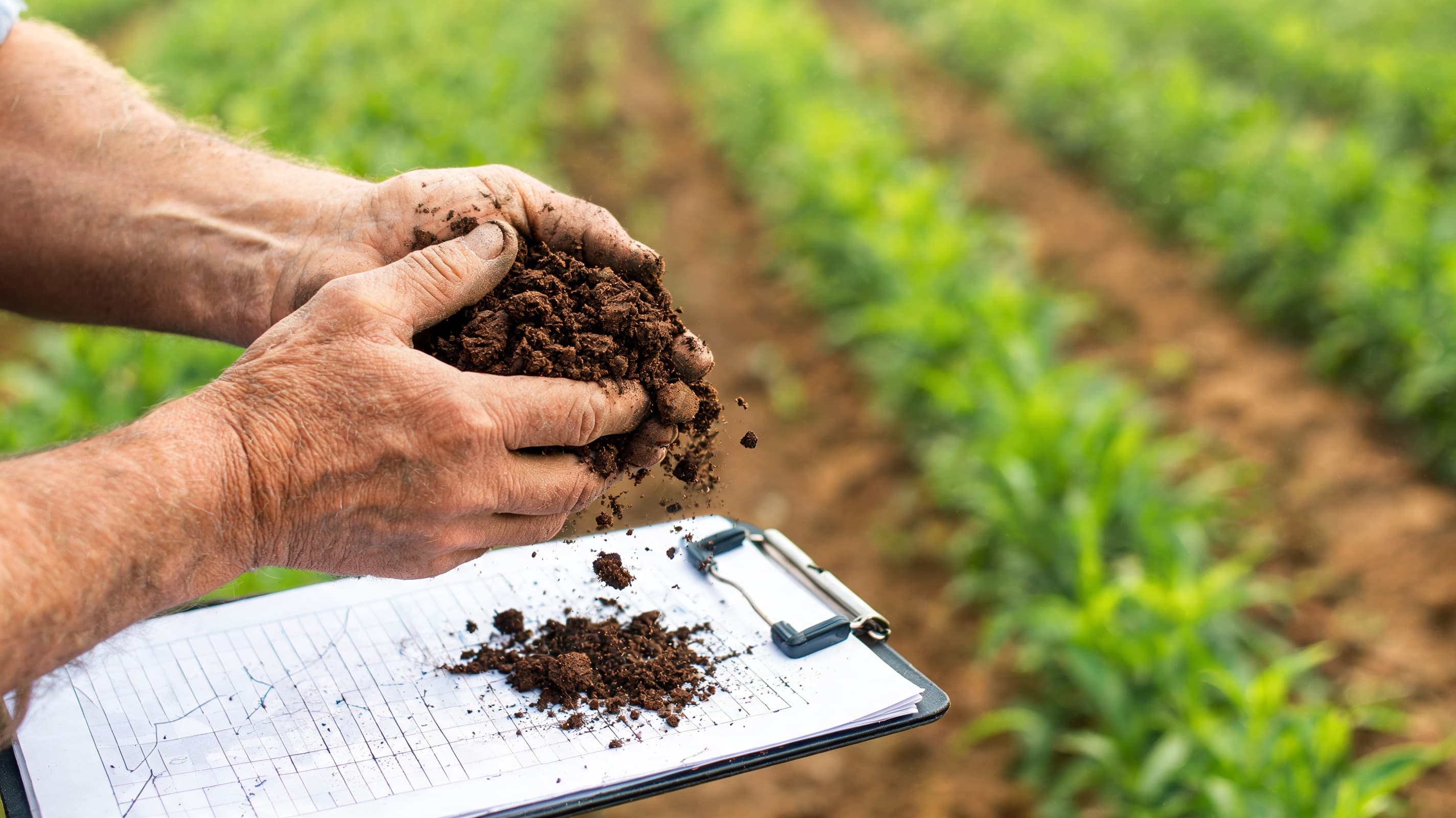
- Dosing without soil analysis. Constantly applying an element already high in the soil leads to salinity and toxicity. Annual soil and leaf analyses (1-2x) are essential.
The Markka Genetik Approach
60% of the Markka Genetik product portfolio consists of water-soluble formulations designed for fertigation. From greenhouse production to open-field drip irrigation, from organic farming to certified export production — a 5-7 product solution set can be built for every need.
At our Antalya AOSB Döşemealtı facility, we produce 50,000 tons annually and export to 30+ countries across 4 continents (Middle East, Balkans, Central Asia, Africa). All our products are 100% water-soluble grade, documented with accredited laboratory analyses.
Fertigation program support: [email protected] · WhatsApp +90 242 424 82 91
Frequently Asked Questions
Can I do fertigation without a drip irrigation system? In the strict sense, fertigation requires drip irrigation. Liquid fertilizer can also be applied via sprinkler irrigation, but uniform distribution cannot be guaranteed. In all modern agricultural investments, drip irrigation and fertigation are installed together.
Are special "liquid fertilizers" required, or can I dissolve standard fertilizer? Fertilizers such as urea, ammonium nitrate, and potassium nitrate are available in dissolvable forms. Conventional DAP or compound granules clog emitters. Markka's "Master" series and liquid series are designed specifically for fertigation.
Can calcium be applied via drip? Yes, but A tank / B tank separation must be applied. Calcium cannot share a tank with phosphate or sulfate. Markka formulations like Calciphine and Maxxim Plus are designed with balanced calcium content for drip application.
What is the most common cause of emitter clogging in fertigation? Three main causes: (1) undissolved fertilizer residue, (2) calcium carbonate buildup at high pH, (3) iron or manganese oxidation. Acid cleaning (nitric or phosphoric) at season start and post-harvest is recommended.
Is a higher concentration of liquid fertilizer more efficient? No — if plant EC tolerance is exceeded, root burn occurs. Low dose, frequent application is the foundational principle of fertigation. Low concentration in every irrigation is always more effective than the traditional "one large monthly dose."
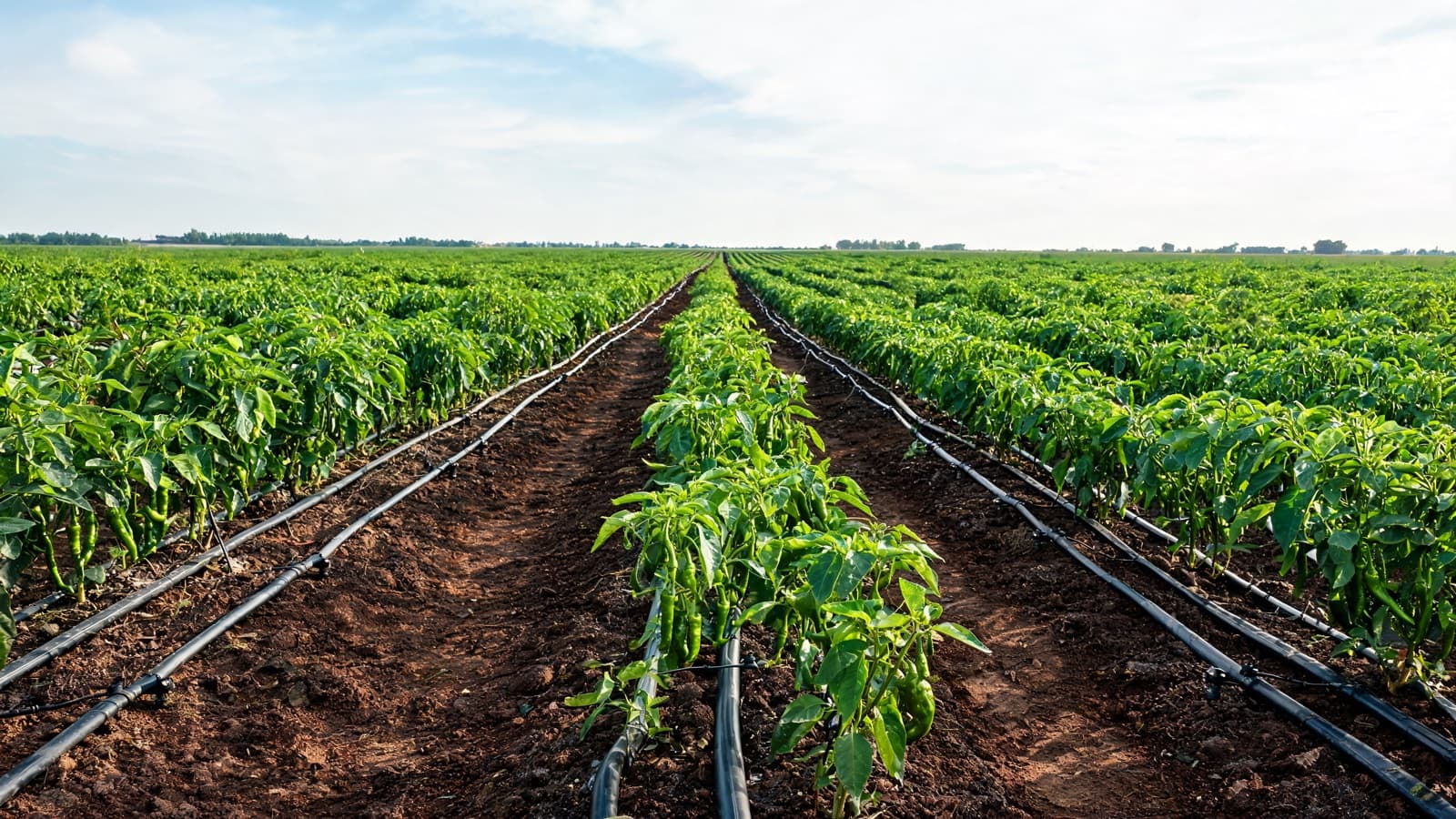
Can fertigation be done with drip irrigation in open fields? Yes — drip irrigation + fertigation is rapidly spreading worldwide in cotton, maize, vegetables, orchards, and citrus plantations. The only difference from greenhouse fertigation is that program flexibility is needed for rainfall.
How expensive is a fertigation system? At greenhouse scale, tank + dosing pump + filter set costs approximately USD 1,500-5,000 (2026 prices, depending on capacity). Investment payback typically occurs within 1-2 seasons through fertilizer savings and yield gains.
Conclusion
Fertigation is the technology that doubles fertilizer efficiency in modern agriculture. Despite initial investment, the combination of fertilizer savings, water savings, and yield gain pays for itself quickly. Beyond that — precise dosing capability, stage-specific intervention, and sustainable resource use — fertigation is an indispensable tool for the modern grower.
As one of Turkey's fertilizer producers since 2006, Markka Genetik offers a product portfolio that serves every stage of your fertigation program — from water-soluble formulations to biostimulants.
Markka fertigation products: markkagenetik.com.tr/products