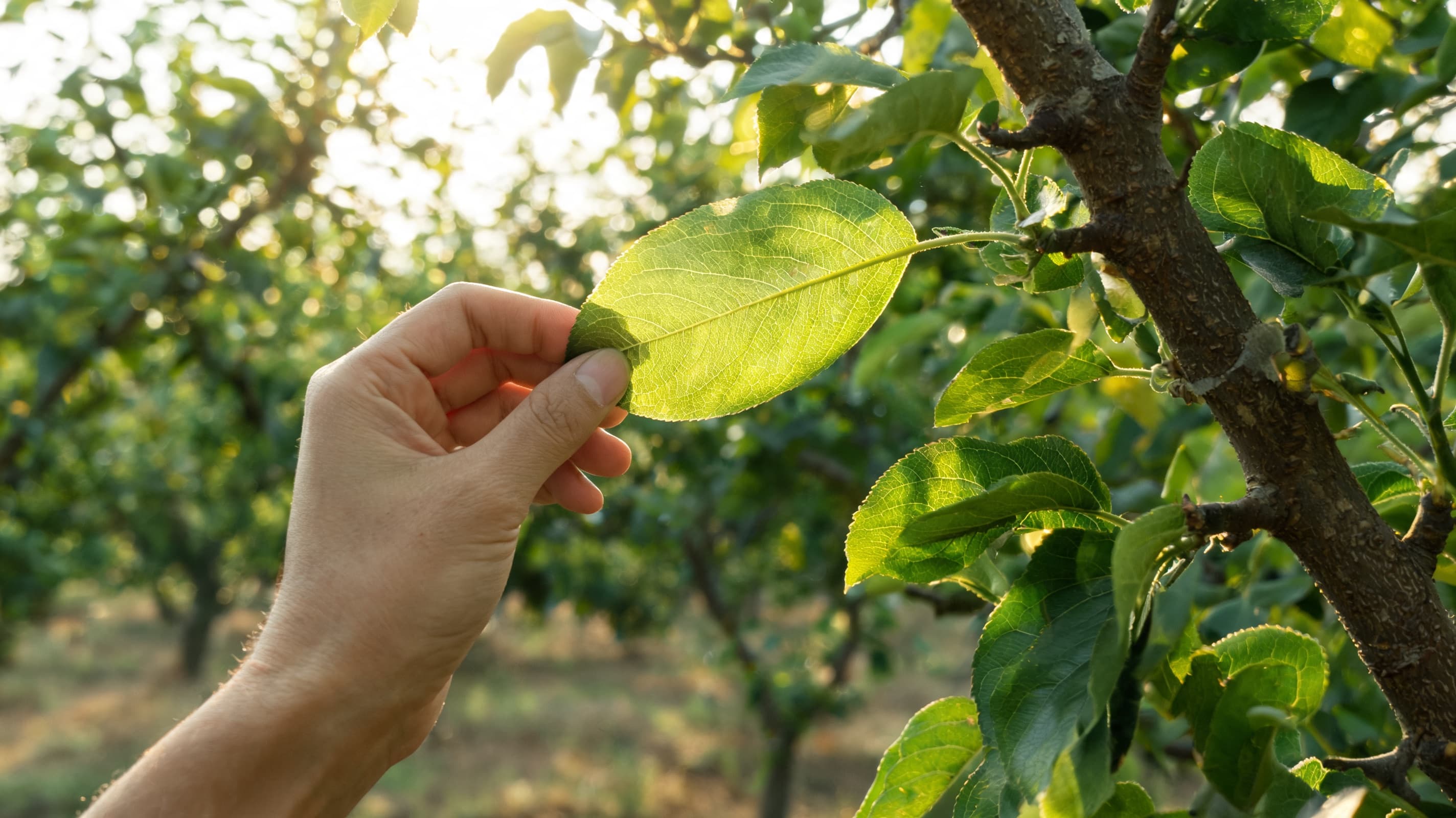
Humic and Fulvic Acid Explained — Soil Benefits and Application
Continuously cultivated soils lose their natural microbial life and organic matter each season. The result: plants struggle to absorb applied fertilizer, water-holding capacity decreases, and root development slows.
Humic and fulvic acids are nature's organic carbon enrichment compounds — accumulated over millions of years to repair exactly this kind of loss. At Markka Genetik, our humic and fulvic acid product line (Doca-22, Nexxus, Humiwicks, Fulvic Powder) has become a strategic category for both domestic growers and export customers.
This guide explains what these acids are, how they work, where to use them, and how — in a clear, source-grounded way.
Humic and Fulvic Acid — Nature's Legacy
Plant residues (leaves, roots, stems), animal waste, and microorganisms break down in soil over thousands of years. The persistent, dark-colored organic compounds formed in this process are called humic substances.
Humic substances divide into three main fractions:
- Humic acid — Soluble in alkaline solution, precipitates in acid. High molecular weight (10,000-100,000 Daltons).
- Fulvic acid — Soluble in both acid and alkaline conditions. Low molecular weight (1,000-10,000 Daltons).
- Humin — Insoluble, remains in soil.
For agriculture, humic and fulvic acid are the critical ones — their soluble structure makes them actively functional in the plant root zone.
Source: Leonardite
Markka's humic/fulvic products, like most quality commercial products, are derived from leonardite — a low-grade coal source. Leonardite formed from semi-fossilized plant remains 50-70 million years ago. Its 50-80% humic substance density makes it today's highest-quality humic source in agriculture.
How Humic and Fulvic Acid Differ
Though both originate from leonardite, their roles in plant and soil differ.
| Property | Humic Acid | Fulvic Acid |
|---|---|---|
| Molecular weight | High (large molecule) | Low (small molecule) |
| Color | Dark brown to black | Light yellow to amber |
| Solubility | Alkaline media | All pH ranges |
| Primary role | Soil structure, water holding | Nutrient transport, plant entry |
| Site of action | Soil (rhizosphere) | Plant (leaf + root internal) |
| Application | Soil/drip dominant | Foliar/drip both |
| Effect speed | Slow, long-term (weeks-months) | Fast (hours-days) |
Practical summary: Humic acid builds the soil's permanent infrastructure. Fulvic acid acts as the plant's immediate helper — accelerating nutrient absorption and carrying micro-elements.
Soil Benefits (Humic Acid Dominant)
Scientific literature documents proven contributions of humic acid to soil:
1. Increases Cation Exchange Capacity (CEC)
The negative charges on humic acid molecules retain positively-charged nutrients (Ca²⁺, Mg²⁺, K⁺, NH₄⁺) that would otherwise be released. This prevents fertilizer from being leached away by rain or irrigation — so more of what is applied reaches the plant.
In dryland soils, CEC improvement can increase fertilizer efficiency by 15-25% (literature average).
2. Improves Soil Structure
Humic acid bridges clay and sand particles, creating aggregate structure. This:
- Increases air space (critical for root respiration)
- Raises water-holding capacity
- Builds erosion resistance
3. pH Buffering
In very acidic or alkaline soils, humic acid's multiple functional groups act as a buffer — softening pH extremes.
4. Feeds Microbial Life
Most soil microorganisms (nitrogen-fixing bacteria, mycorrhizal fungi) feed on organic carbon. Humic acid provides this carbon source. As microbial activity rises, natural nitrogen and phosphorus mineralization accelerates — the soil generates some of its own fertility.
Plant Benefits (Fulvic Acid Dominant)
Fulvic acid's small molecule size allows it to enter plant leaves and roots directly. This gives it its "natural carrier" role.
1. Nutrient Chelation
Fulvic acid molecules wrap iron (Fe), zinc (Zn), and manganese (Mn) in chelate form. Elements applied this way become accessible to the plant even in calcareous or high-pH soils.
Markka's Nutri Fulvic Zinc product uses this principle to deliver zinc to the plant.
2. Increases Cell Permeability
When applied to leaves, fulvic acid opens stomata and increases membrane permeability — speeding the absorption of foliar fertilizers. Field trials show macro-element absorption improving 20-40% when fulvic acid is added as a co-solvent.
3. Stress Tolerance
Under abnormal conditions like salt stress, drought, or cold shock, fulvic acid-treated plants show increased antioxidant enzyme activity (reported in studies such as Bozkurt et al. 2011, Yıldırım 2007). This means the plant endures stress with less damage.
4. Root Stimulation
Fulvic acid behaves like a hormonal signal molecule, promoting lateral root and root hair formation. Applied during the seedling phase, fulvic acid products accelerate root system development.
Which Markka Product for Which Purpose?
Markka's four products in the humic/fulvic category differ in form and ratio:
Doca-22
Form: Liquid concentrate Profile: 22% total humic acid, balanced fulvic Use: Soil/drip — start of season, repeated as needed Goal: Soil structure improvement, CEC increase
Nexxus
Form: Concentrated liquid Profile: High humic weight + biostimulant combination Use: Drip — vegetative and flowering stages Goal: Broad spectrum, both soil and plant support
Humiwicks
Form: Liquid, granular option Profile: Humic-acid dense, suitable for organic farming Use: Soil — foundational season-start application Goal: Rehabilitation of depleted soils
Fulvic Powder
Form: Powder (water-soluble) Profile: High-purity fulvic acid Use: Foliar or drip — for immediate effect and chelation purposes Goal: Micro-element co-application, stress periods, seedling phase
Typical Application Doses
Important: Specific dose is always determined by the product label and soil analysis. The values below are approximate general ranges.
| Method | Typical Dose | Frequency |
|---|---|---|
| Drip irrigation | 2-5 L/ha (liquid), 1-2 kg/ha (powder) | Monthly 1-2x |
| Foliar | 100-200 mL/100L (liquid), 50-100 g/100L (powder) | Every 10-15 days |
| Surface broadcast (granular) | 30-50 kg/ha | Once at season start |
| Transplant drench | 1-2 mL/L (root dip) | At planting |
Common Mistakes
- "More is better" thinking. Excess humic/fulvic acid can precipitate in soil or burn foliage. Stick to label dose.
- Mixing with calcareous water. Humic acid solutions can precipitate in hard water. Maintain tank pH 6-7 and test compatibility in a small sample first.
- Expecting standalone use to work. Humic/fulvic acid is not a standalone fertilizer — it is a category that improves fertilizer efficiency and soil health. Always paired with macro and micro element fertilizers.
- Mistaking low-quality products for "cheap alternatives." In low-quality leonardite-based products, actual humic content can fall below label claim. Choose products backed by accredited laboratory analysis.
The Markka Genetik Approach
Humic and fulvic acid is a strategic category in Markka Genetik's portfolio. At our Antalya AOSB facility, we standardize formulations from leonardite-source raw material analyzed in our own laboratory; each batch is documented with accredited analysis reports.
Product consultation: [email protected] · WhatsApp +90 242 424 82 91
Frequently Asked Questions
Can humic acid be used in organic farming? Yes. Leonardite-derived humic/fulvic acids are natural organic compounds permitted in organic farming regulations. Markka's Turkish Ministry of Agriculture-registered formulations follow international production standards.
Can humic acid be applied with fertilizers? Yes — and this is in fact the most effective use pattern. Humic acid enhances fertilizer efficiency. Before mixing in a drip tank, always perform a small-scale compatibility test; no precipitation should occur.
For foliar application, humic or fulvic? Fulvic acid is preferred for foliar use. Its low molecular weight allows it to pass through stomata and cell membranes into the plant. Humic-dominant products are better suited to soil application.
How should the "X% humic acid" label figure be interpreted? This is the percentage of pure humic acid in the product's total weight. A liquid product labeled 12% humic acid contains 120 grams of pure humic acid per liter. Quality liquid products in the market range from 10-25%; extreme claims (30%+) must be supported by laboratory documentation.
Does humic acid alone increase yield? When used alone, direct yield increase is limited. Yield gain comes indirectly through humic/fulvic acid supporting fertilizer uptake and soil health. This is why combination use is recommended.
How often should it be applied under greenhouse conditions? In greenhouse production, monthly or twice-monthly drip application is a standard program. Heavier application at season start (soil preparation), support dose mid-season, rehabilitation dose post-harvest.
Does humic acid solve a calcareous soil problem? Humic acid buffers pH to some degree, but it is not sufficient to "dissolve" high calcium carbonate content. In calcareous soils, an acidifying sulfur application combined with humic acid is a more effective long-term solution.
Conclusion
Humic and fulvic acid is a category that should be considered foundational in modern agriculture. It is best understood as "not a fertilizer itself, but the backbone that makes fertilizer work." Protecting soil health, carrying micro-elements, and feeding microbial life, these organic molecules are essential to sustainable agriculture.
With 20 years of production experience, Markka Genetik offers four distinct humic/fulvic products to growers from greenhouse to open-field, organic to conventional.
Markka humic/fulvic product guide: markkagenetik.com.tr/products?category=fulvic-humic